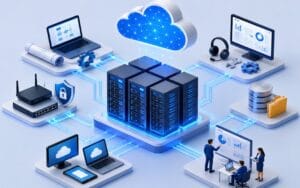
Intelligent IT support is more than just fixing devices that are broken. It also enables collaboration and hybrid infrastructures, as well as defining the digital tools used by employees every day. Modern IT support can help organizations improve their productivity, employee retention and efficiency.
Each business owner wants to have a highly productive staff. Productivity is not a result of a motivational post or team building exercise. Most often, productivity is a function of the technologies that employees use every day – and whether or not they work well.
Smarter IT support can make a big difference. It’s not the type that shows up only when things break, but rather the kind which actively manages and optimizes your tools. Your organization can be transformed by the right IT partner. Employees will focus more on important tasks, rather than struggling with slow systems or software that is incompatible.
The post explains how IT support can improve employee productivity. It covers everything from the relationship between IT and employee output to digital employee experience, hybrid work collaboration and more.
What is the impact of technology on employee productivity?

Modern work is centered around technology. It doesn’t matter if it is a spreadsheet that tracks quarterly revenues, a PowerPoint presentation for a meeting with a board, or video calls connecting remote teams across time zones. Each of these depend on tools which either work smoothly or cause friction.
Employees who are well-trained in the use of technology can:
- Data processing software that is purpose-built for data analysis will help you process and analyze data more quickly.
- Communication is easier with reliable video and messaging platforms
- Share documents with others and store files in the cloud to collaborate instantly
- Report and present work with confidence using responsive reporting and presentation software
- Easily integrate bookkeeping tools with project management software to stay organized
Employees are more productive when these tools function as designed. If they fail, morale and productivity suffer.
Does outdated technology affect employee productivity?
Organizations often undervalue the productivity cost of outdated technology. Costs are often not apparent until the total is added up.
The Saman age State of Workplace Survey, cited by HR Dive & Spark light Business, shows that U.S. companies lose as much as $1.8 trillion annually due to outdated infrastructure. ICT Inc. data suggests that employees are losing an average of 10.5 workdays each year because of tech problems.
The numbers show a common pattern that most employees are familiar with. These problems are not just a waste of time. These problems can cause frustration over several weeks or months.
It goes far beyond the time lost.
- Vulnerabilities: Older computers are more vulnerable to attacks and can be costly.
- High maintenance costs Legacy hardware and/or software may require frequent (and/or more expensive) repair.
- Turnover and employee frustration. According to Ivanti’s State of Digital Experience Study, 49 percent of employees were frustrated with the technology offered by their organizations and 26 percent had considered quitting their job because of this. This is a major retention issue for any company.
It’s not a small inconvenience. This is a serious business concern.
How Does smarter IT support actually look?
It is no longer true that the traditional picture of IT support, a technician coming to repair a broken computer, accurately reflects what IT support does. The modern IT support model is strategic, proactive and integrated with the business.
What is proactive IT monitoring?
Smarter IT teams monitor devices and networks for warnings before they break. A proactive IT team will address any issues before they cause an outage, such as if a server shows signs of stress or the hard drive on a device is close to failure.
This method, which is often called Managed IT Services (MITS), shifts the focus from reactive support to proactive. This results in fewer interruptions and less downtime. Employees can continue their work without being interrupted.
How important is IT strategy advice for long-term productivity in IT?
Support for IT goes beyond the day-today issues. Good IT partners also provide advice on technology choices that will shape your company over time, from software purchases and infrastructure upgrades to compliance policies and cybersecurity frameworks.
This function provides strategic advice to help organizations make better investments. Businesses can create a tech stack that supports their team’s workflow, rather than buying tools that are difficult to integrate or that do not scale well.
Elevate Services Group explains that modern IT support involves “more than simply contacting the Helpdesk.” Professionals in IT support today manage and monitor networks, while also offering IT advice that is aligned with business goals.
What are the benefits of IT support for collaboration in hybrid work environments?
The hybrid work model has changed the way teams function. The employees split their time between the home and office or even in different cities. This split can create communication problems, file sharing headaches and delays in collaboration without the proper IT infrastructure.
Cloud-based solutions fill this gap. Platforms such as Microsoft Teams or OneDrive enable employees to collaborate on files, share documents and host video conferences, regardless of their location. These tools, when configured properly, supported and secured, can help hybrid teams achieve a degree of cohesiveness that is comparable to (and sometimes even exceeds) the level possible in traditional offices.
This is made possible by IT teams. These teams are responsible for the integration, deployment and management of cloud platforms, ensuring employees have the resources they require, regardless if they’re working at home or in an office.
It’s not just that hybrid work is changing the way people work, but it’s also changed IT’s stakes. The system failure at 9AM used to only affect one building. It can now affect a distributed workforce at the same time.
What is IT support and how does it help businesses scale without losing productivity?
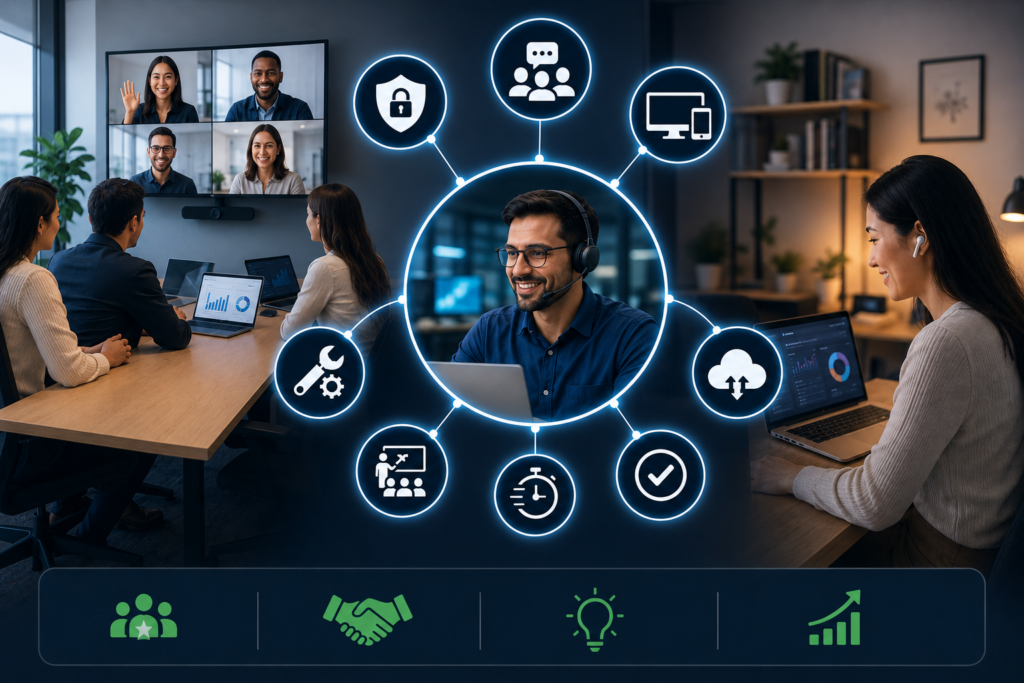
Most organizations are aiming for growth. Growth creates additional demands for IT infrastructure: more users, devices, data and complexity.
Scalable IT infrastructures can increase workloads and maintain performance. It could mean upgrading the network bandwidth or adding additional security measures, as well as providing new staff with software and access to it.
Growing businesses can hit a brick wall without IT support. Security gaps increase, systems slow down and infrastructure that was meant to help the business become a bottleneck.
Strong IT partners anticipate these growth points, and build infrastructures that can flex with business needs. This could mean scaling up when hiring is high or scaling down after a particular project.
Why is digital employee experience (DEX), and what does it mean for productivity?
The Digital Employee Experience, also known as DEX describes how employees use the tools of technology provided by their employers. This includes everything from the performance of devices and software to how fast IT problems are resolved.
Ivanti’s DEX Report 2025 found that 86% of IT teams agreed that DEX has a positive impact on productivity. Yet the same research shows that both adoption and integration of DEX strategies remain inconsistent across organizations meaning many businesses are leaving productivity gains on the table.
What is the impact of DEX on employee engagement and retention in hybrid workplaces?
DEX is directly related to retention. Employee frustration increases when they are constantly faced with slow software, devices that perform poorly, or tools which don’t function well together. Ivanti research shows that, as mentioned earlier, nearly one-fourth of employees have considered quitting their jobs because they are frustrated with technology.
- DEX-focused support for IT addresses this through:
- Monitor device performance to detect issues as early as possible
- Software configurations should be standardized to ensure tools perform consistently
- Automation of routine IT tasks, such as software upgrades and patch management to reduce disruptions
- Collecting feedback from employees on their technology experience to improve the system
DEX is a strategy that can have measurable effects on productivity and morale. It also improves employee engagement.
How Should You Choose an IT Support Provider?
The right IT partner can be one of the best technology investments a company makes. A bad partner can create dependency but fail to deliver results. A good partner becomes a member of your team—a trusted adviser who understands your business goals and creates the IT infrastructure needed to support them.
Prioritize the following:
- Managed Services and Proactive Monitoring: Find a partner who monitors your systems continuously, not just when something breaks. Working with a reliable managed IT services provider can help identify and resolve issues before they impact your operations.
- Strategic IT Guidance: Your IT partner should be able to provide strategic advice that aligns technology investments with your long-term business objectives.
- Cybersecurity Expertise: Security and productivity go hand in hand. A partner with strong cybersecurity capabilities can help protect your business from downtime, data loss, and other consequences of a security breach.
- Support for Scalability: Choose a partner with experience helping businesses grow without outgrowing their IT infrastructure.
- Clear Communication: Before hiring an IT partner, clearly explain your business goals, existing IT environment, and the specific challenges you want to address. Good partners listen carefully before making recommendations.
Elevate Services Group emphasizes that clearly communicating your IT goals and infrastructure when engaging an IT support provider is essential. This upfront clarity creates the foundation for a successful partnership and ensures your technology strategy supports your business growth.
IT support that is smarter and more productive can be a productivity strategy, not an overhead cost
Businesses that view IT support more as an investment than as a necessity will see their returns compound. Less disruptions means more concentrated hours. Better tools mean stronger collaboration. Security that is proactive means less costly incidents. A workforce who isn’t always battling with technical issues is one that will bring their best work to the table.
Businesses of all sizes can easily make the shift from reactive IT support to proactive strategic IT partnerships. First, you must recognize that the productivity of your team is directly related to how your technology performs.
Elevate Services Group offers a no-obligation consultation to anyone who is interested in learning more about how smarter IT can be for their organization.
FAQs
How does IT support affect employee productivity?
By managing the systems, tools and infrastructure that employees depend on every day, IT support has a direct impact on employee productivity. If IT support is managed well and proactive, it will result in fewer interruptions for employees, more efficient tools and quicker resolutions of technical problems.
How does Digital Employee Experience impact productivity?
Digital Employee Experience refers to how employees interact with the technology at their work. Ivanti’s DEX Report 2025 found that 85% of IT teams believed strong DEX positively impacted productivity. A poor DEX, caused by slow software or unreliable hardware, leads to frustration, and according to Ivanti’s research, 26% of workers consider quitting their job.
What is the role of IT in hybrid collaboration?
Cloud-based collaboration platforms such as Microsoft Teams and OneDrive are managed by IT teams, allowing remote employees and office workers to share documents and communicate in real-time. Hybrid teams will be able to collaborate seamlessly if they have the right configuration, ongoing security monitoring, and management of their platforms.
How can a company find the right IT partner for their business?
Find a partner who offers proactive monitoring of your systems, IT advisory services that are strategic, cybersecurity expertise, and infrastructure solutions with scalability. Before making any recommendations, a good IT partner will take the time to fully understand your goals for business and current infrastructure.
What is the role of scalable IT Infrastructure in supporting business growth?
A scalable IT infrastructure enables businesses to increase their network capacity and add new staff without having to compromise system performance. These IT partners can help you design and implement systems that will not create security issues or bottlenecks.