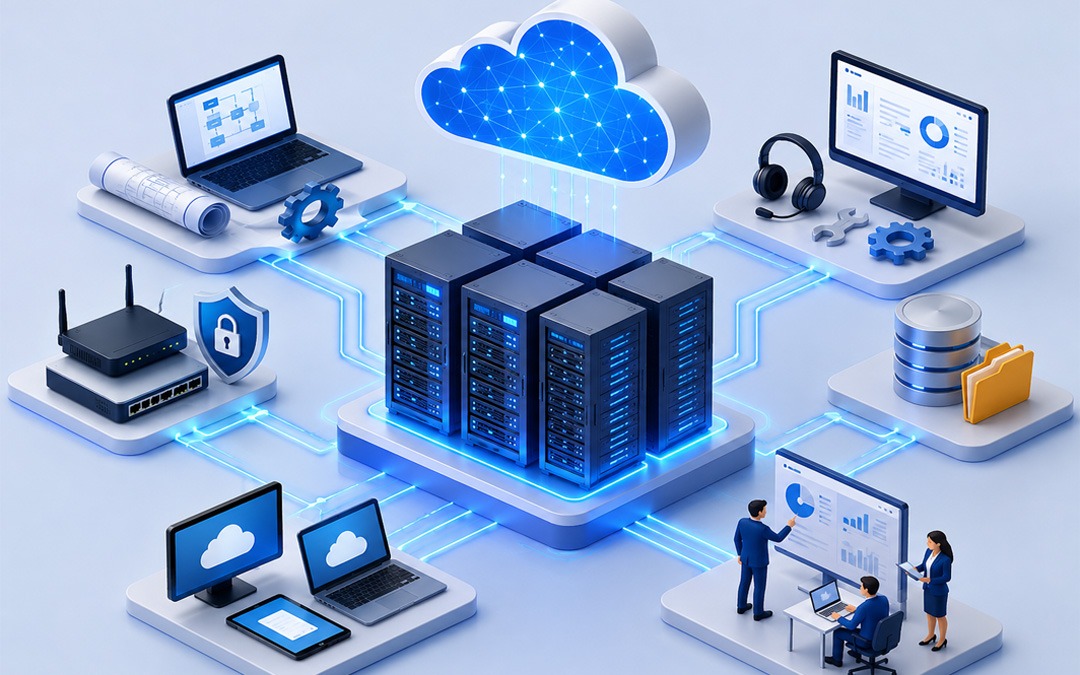
In today’s world and age, technology is crucial to a business. There is hardly any business activity without IT systems these days, it could be for storing data, or communicating with consumers. By utilizing a robust IT infrastructure, companies can enjoy a variety of advantages such as productivity, reduction in downtime, and secure operation.
What is IT Infrastructure?
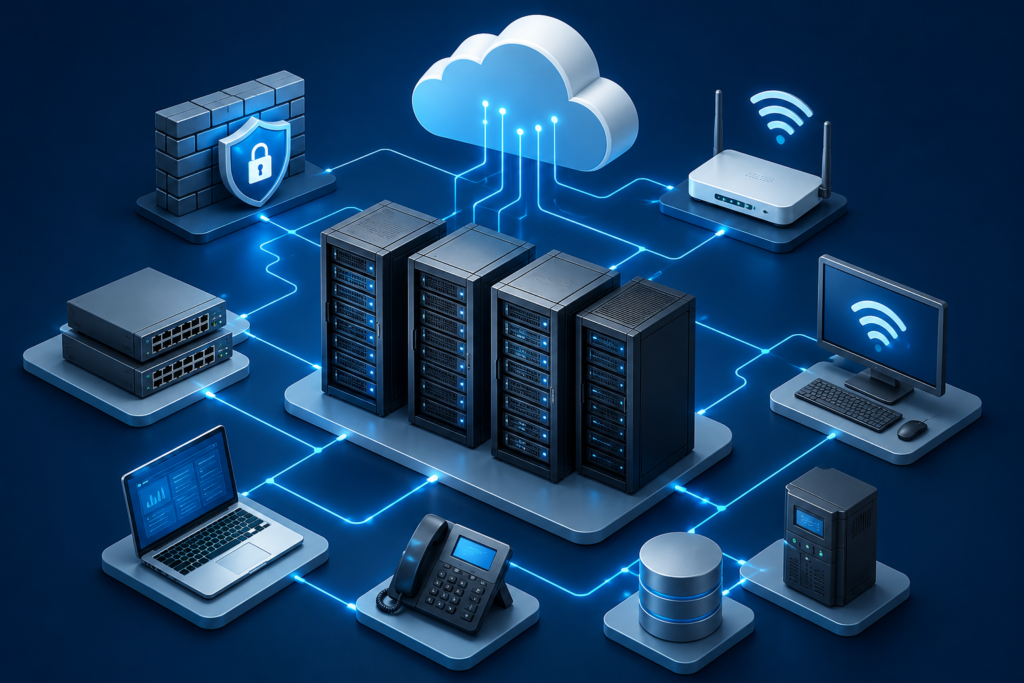
Understands the concept of IT infrastructure and all its technical elements in the IT environment of an organisation, including networks, hardware, software, data centres and components. It includes computers, servers, storage, cloud computers, operating systems and internet.
What Are IT Infrastructure Projects?
IT infrastructure projects are a set of projects that are planned for the improvement, implementation or upgrade of an organization’s IT systems.
Some common IT infrastructure projects include:
1. Server Upgrade Projects
When businesses go out to buy new systems, it’s to address their issues with old servers, like enhanced speed, improved reliability, and added security.
2. Cloud Migration Projects
Even the majority of businesses can shift application and data on-premises to the cloud (such as Microsoft Azure, AWS or Google Cloud).
3. Network Expansion Projects
As businesses expand they could need more office connectivity, more office routers/switches or they might need an extra connection to their network.
4. Data Center Modernization
To achieve more efficient energy use, expand storage and improve performance, businesses take advantage of upgrades that can be implemented on their current data centers.
5. Cybersecurity Implementation Projects
Projects can involve the deployment of endpoint protection, multi-factor authentication and other security measures to ensure protection of the enterprises’ business information via firewalls.
Planners need to carefully plan, budget, test, and support an IT infrastructure project to ensure its success.
What Is IT Infrastructure Services?
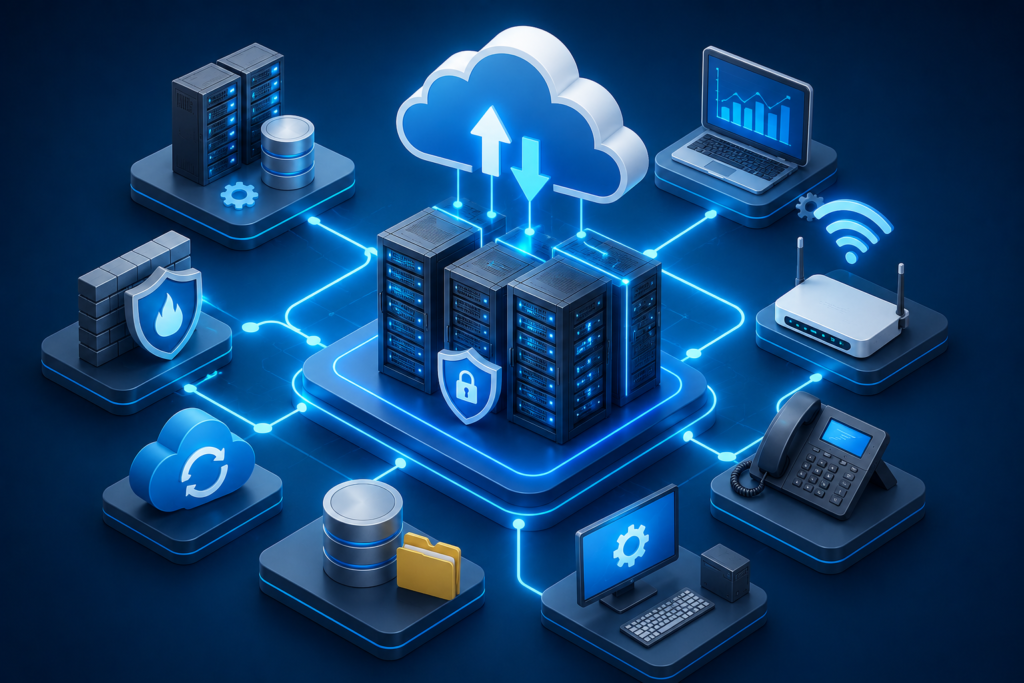
IT infrastructure services are professional services which are used to enable business to construct, manage, organise and improve their IT infrastructure.
Some services that IT infrastructure provides are:
Network Management
Providing surveillance and upkeep of the network, internet connections, and communication systems.
Server Management
IT teams provision, operate, and maintain physical and virtual servers that support the smooth operation of applications.
Cloud Services
Cloud infrastructure services are offerings like cloud migration, cloud monitoring, backup, and cloud security management.
Data Backup & Disaster Recovery.
Having regular backups and disaster recovery plans in place can help ensure that organizations can recover quickly in the event of an unexpected event, like a cyber-attack or hardware failure.
Cybersecurity Services
Security services include functionality making the threat monitoring, vulnerability assessment, firewall management and security updates.
Help Desk and Technical Support
IT support teams lighten the burden of their employees and fix any issues surrounding an IT environment related to hardware, software or connectivity.
Pexo’s infrastructure solutions may be right for businesses looking for a reliable infrastructure support. The team can be easily depended on for proactive monitoring, server and network management, managing cloud services, cybersecurity support, and Disaster Recovery services to ensure the seamless and secure operations of organizations.
What Is IT Infrastructure Management?
IT infrastructure management is the process of monitoring, maintaining, and improving the organization’s IT resources.
Typically, the following elements are part of IT infrastructure management:
Monitoring IT Systems
Continuous monitoring involves taking proactive steps to reduce the likelihood of the issues happening and limiting the effect on business operation if they do implement.
Show how to correctly manage hardware and software systems.
In addition to serving the IT Teams, Enterprise Application, Operating System and Storage Device can be maintained in the Servers.
Security Management
To have infrastructure managers in place with security solutions that protect systems from cyberattacks and unauthorized access.
Capacity Planning
In the post-pandemic business landscape, organizations will need to evaluate tech requirements to make decisions about infrastructure investments, with the end goal of meeting future technology demand.
Performance Optimization
System maintenance, software patching, and system tuning ensure that the performance is optimized and downtime is prevented.
Backup and Recovery Management
While backing up valuable business data, you’re ensuring that the valuable data can be recovered in an instant in case it is needed.
By investing in good infrastructure management, organisations can reap a few benefits:
- Increased system reliability and uptime.
- Better cybersecurity protection.
- Increased employee productivity.
- Reduced operational costs.
- Faster issue resolution.
- Enhanced business continuity.
Conclusion
IT infrastructure boasts itself as the backbone for every business to run. The technology decisions should be based on a better understanding of IT infrastructure project/service needs and the processes that constitute IT infrastructure management.
Productivity, security, and future growth can be enhanced with a doubling down on good infrastructure and management.