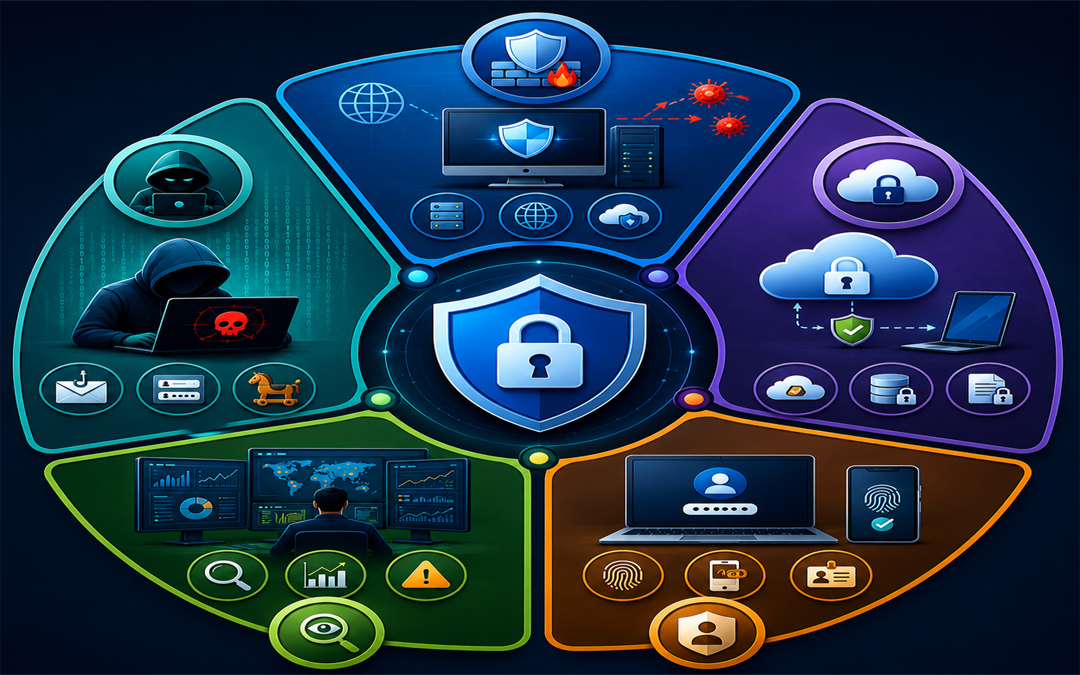
In a world where everything is so connected, right from banking and shopping to business operations – cybersecurity is no more optional. Every login, click and transfer of data has potential risk. Cybercriminals are consistently looking for susceptibilities, and this is the reason understanding the various kinds of cybersecurity is required for businesses and individuals in same manner.
Cybersecurity is not a single software or tool. It is a layered approach that shields networks, applications, data and systems from all kinds of unauthorized attacks, damages and access.
Kinds Of Cybersecurity And Examples
Let’s know about five major kinds of cybersecurity, along with some examples to know how they function in real life.
1. Network security
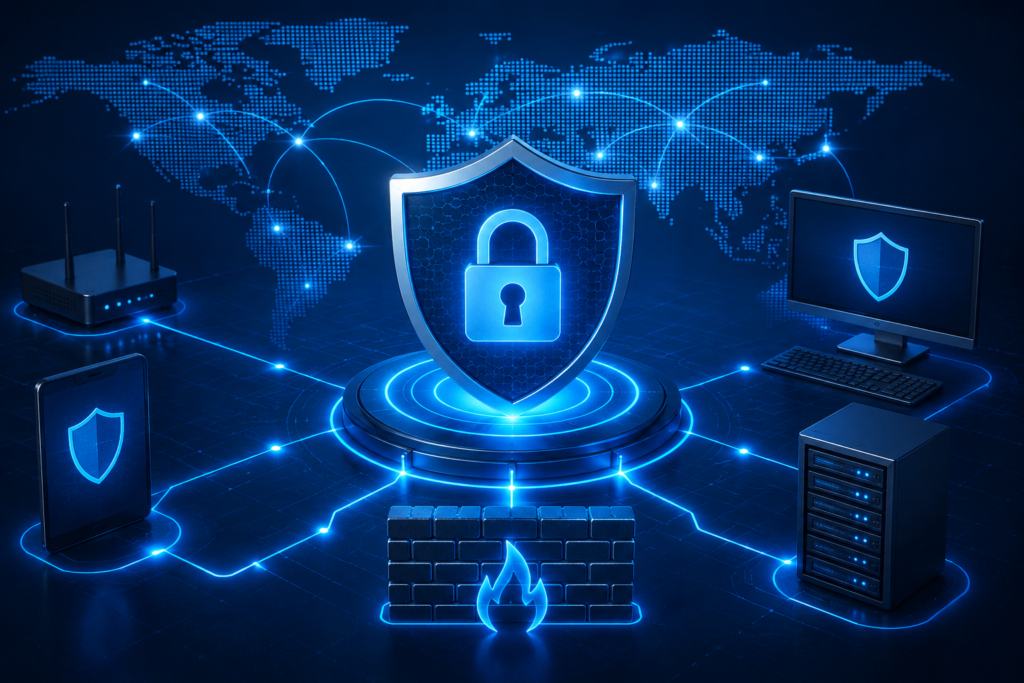
Network security focuses mainly on protection of computer network from unauthorized access of users, cyberattacks and data breaches. As maximum digital communication occurs over networks, this is one of the most important layers of cybersecurity.
Critical elements:
- Firewalls
- Virtual Private Networks or VPNs
- Intrusion Detection Systems
- Secure Network Configurations
Examples:
Think of a company that installs a firewall for monitoring incoming and outgoing traffic. In case a hacker attempts for accessing the system, the firewall blocks the request and prohibits unauthorized entry.
Importance:
In absence of a strong network security, it becomes easy for attackers to infiltrate systems, steal sensitive data and cause disruptions in operations.
2. Application Security
Application security includes protection of software and applications from threats at the time of development and post development. Since apps often manage sensitive data, they are common targets for cyberattacks.
Important elements:
- Safe coding practices
- Update and patches on regular basis
- Authentication systems
- Vulnerability testing
Example:
An online shopping application make use of safe login methods and regular updates are done for fixing bugs. This prohibits hackers from exploiting weaknesses for accessing consumer data.
Importance
Even a minor vulnerability in any application can result in huge data breaches or compromise of system.
3. Information security
Information security focuses mainly on protection of data from corruption, theft or any unauthorized access. It make sure that all sensitive data stays confidential and accessible only for authorized users.
Important elements:
- Data encryption
- Access control systems
- Classification of data
- Backup
- Recovery solutions
Example:
A healthcare center encrypting records of patients so that only certified doctors and staff can get access to them, making sure there is compliance and privacy.
Importance:
One of the most valuable assets today is data. Losing it can result in loss of finances, damage to reputation and legal outcomes.
4. Cloud security

As businesses are moving more and more to cloud platforms, importance of cloud security is also increasing. It focuses on protection of data, applications and services that are hosted in cloud environments.
Important elements:
- Identity and access management
- Data encryption
- Configurations of secure cloud
- Consistent monitoring
Example:
A company storing files on the cloud allows multi-factor authentication. Even when somebody gets the password, they can’t get access to the account without extra verification.
Importance:
Cloud platforms store big volumes of sensitive data, which makes them strong targets for cybercriminals.
5. Endpoint security
Endpoint security shields devices like laptops, desktops and smartphones that connects to a network. With remote work becoming more and more common, keep these devices safe is important.
Important elements:
- Anti-virus and anti-malware software
- Monitoring of devices
- Endpoint detection and response
- Safe device policies
Example:
An employee laptop is well-equipped with antivirus software that finds and eliminates malicious files before they cause any harm to the system or spreads to the network.
Importance:
Each connected device is a potential entry point for attackers. Weak endpoints can cause compromise of the whole system.
Importance Of Multi-Layered Approach
No single kind of cybersecurity can offer full protection. Cyber threats are consistently evolving and attackers often cause exploitation of various vulnerabilities at a single time. This is the reason, all five kinds can create a strong defense system.
Like for instance, even when you have a safe network, a weak application or any unprotected device can cause exposure of your data. A multi-layered approach make sure that when one layer fails, other continue to give protection to your system.
Keep Your Cybersecurity Strong With Expert Support
Protecting your business from cyber threats needs more than any basic tools. It needs a planned and proactive approach. If you are searching for a dependable and latest protection, professional cybersecurity services can bring in all difference.
The Solutions offered by Pexo it consluting assists businesses in recognizing vulnerabilities, execute strong safety measures and stay ahead of evolving threats. Right from risk assessment to real time tracking, investment in expert cybersecurity support make sure your data, systems and reputation stays safe.
Conclusion
Cybersecurity is a necessity in present day digital landscape. The five important kinds- network security, application security, information security, endpoint security and cloud security- each play a vital role in protection of your digital atmosphere.
Understanding those categories assists in building a strong defense against cyber threats. Whether you are an individual user or you are running a business, staying well-informed and proactive is one of the best way for staying safe.