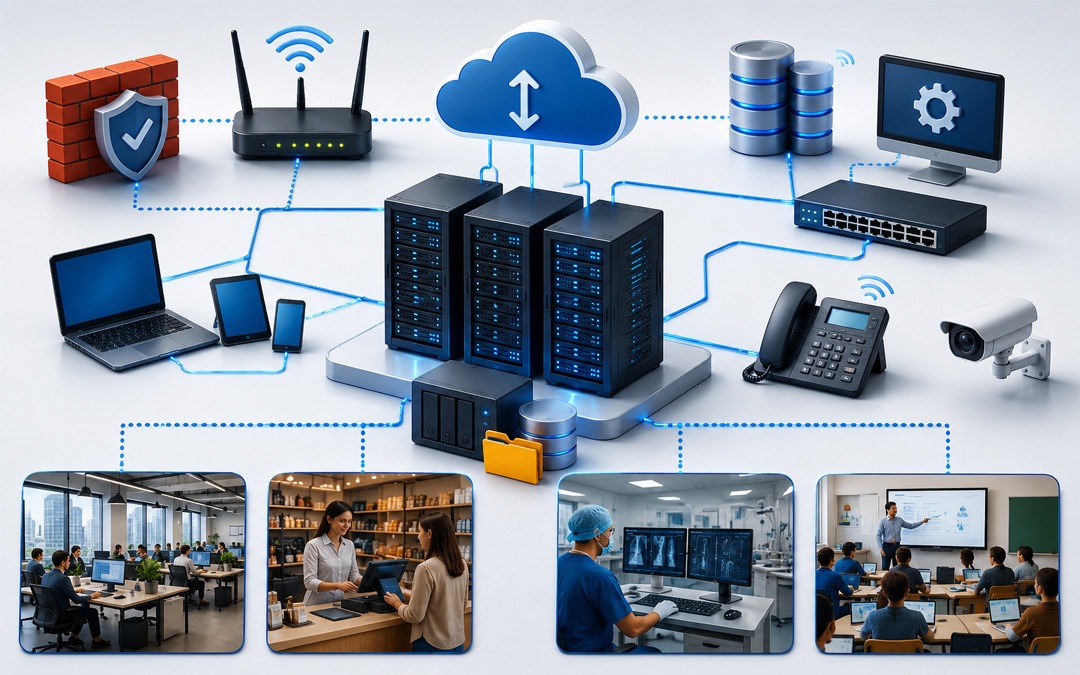
In a modern-day digital world, each enterprise relies technology for its effectiveness. Technology is utilized in almost every business activity, such as emailing, filing, running applications and communicating with customers. The backbone of digital operations is called the IT infrastructure.
What Is the Meaning of IT Infrastructure?
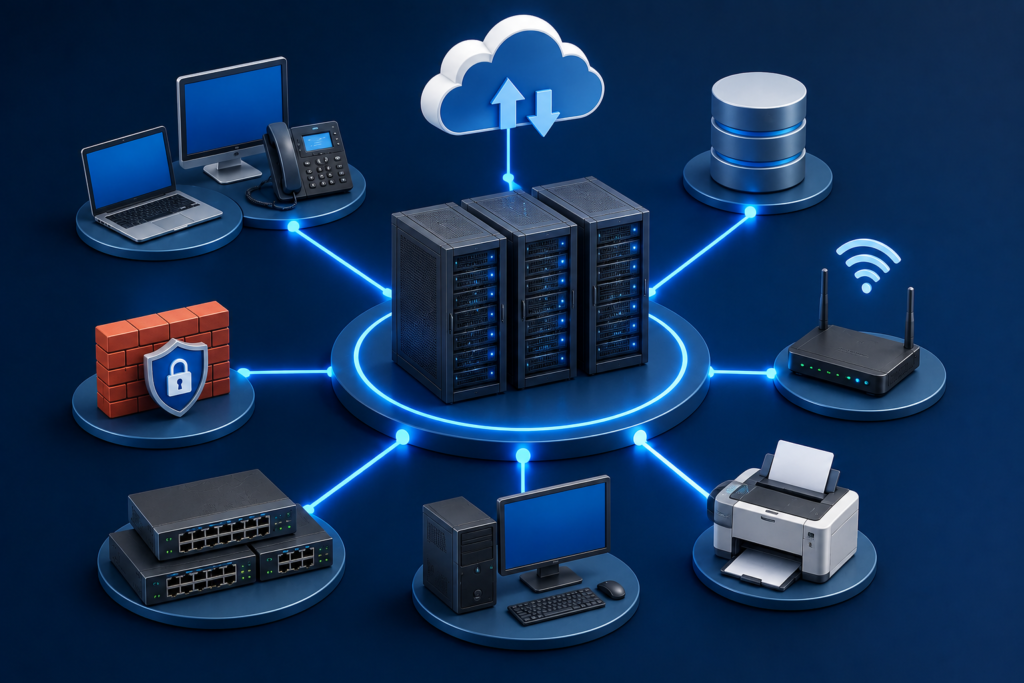
IT infrastructure refers to all the hardware, software, networks, places and services on offer to support the organisation’s IT environment.
IT Infrastructure is the technology backbone and foundation to support businesses to manage their digital activities in an efficient manner.
It refers to the equipment at disposal as computers and servers, software, internet, cloud technology and security. These work in tandem to enable workers to transition seamlessly and naturally from one workflow to another and to easily access information and communicate with coworkers.
You can leverage a solid IT infrastructure to enable your enterprises to:
- Maximise productivity and efficiency
- Secure sensitive information
- Reduce downtime
- Support remote work
- Expand and scale operations as the business grows
What Are the Main Components of IT Infrastructure?
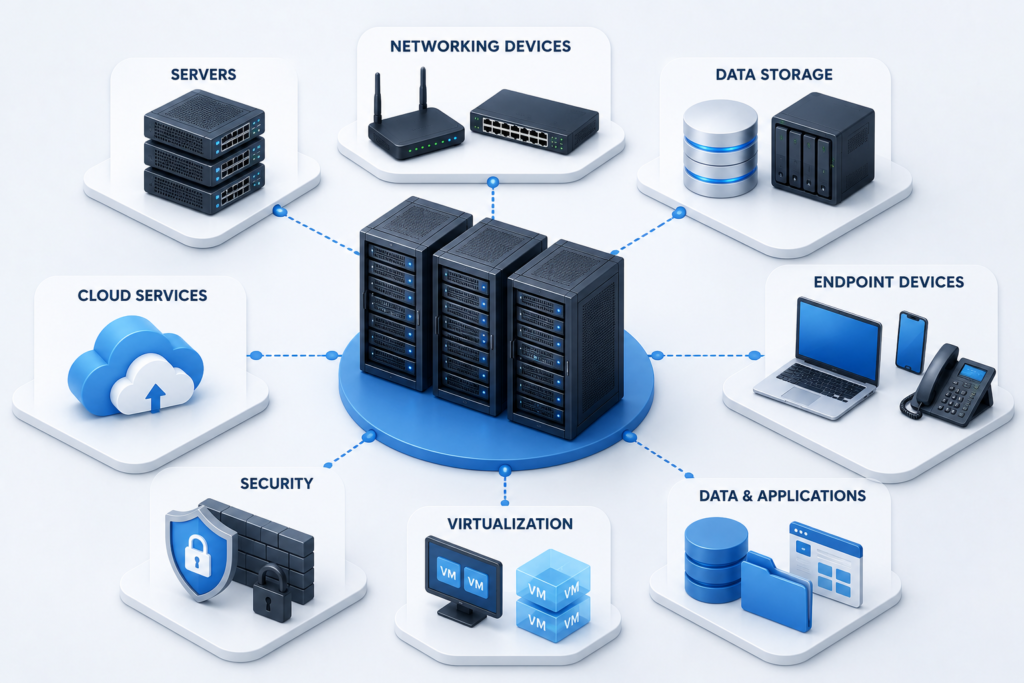
1. Hardware
Hardware is a component concerned with the material components in an information technology (IT) environment. This would include desktops, laptops, servers, storage, printers, routers and switches. They are the cornerstone of an organisation’s technology framework.
2. Software
Defining Software: Refers to the software that are the programs or applications that workers use every day. These include business software, databases, productivity software, e-mail and systems software/firmware, including operating systems. The software is something that helps users to carry out tasks and business processes properly.
3. Networking
Networking is the process of linking devices, systems and users to the network throughout the organisation. She would have routers, switches, WAPs, and Internet connections for employees to communicate with each other, share files, and use the Internet.
4. Data Storage
The amount of data generated by businesses is vast and extensive every day. Storage infrastructure consists of hard drives, storage servers, and cloud-based storage solutions for securely storing and managing business data. It is also crucial to have backup systems to reduce data loss.
5. Cloud Services
Cloud Computing has become a part of today’s infrastructure. Cloud services are accessed applications, storage and computational power that provides flexibility, scalability, but no huge investment of on-premises application, storage or processing hardware.
6. Security Systems
Secure solutions safeguard business systems against cyber attacks. Sensitive information is protected, and your system remains secure by the use of firewalls, anti-virus applications, encryption and multi-factor authentication.
Together they create a reliable IT environment that supports IT efficiency, productivity and organization growth.
What Is IT Infrastructure Examples?
Let’s have a look at some practical examples of IT infrastructure that will assist with understanding the concept.
Example 1: Small Business Office
A small office can be comprised of:
- Ten employee laptops
- A Wi-Fi network
- Cloud-based email services
- Cloud storage solutions
- Antivirus software
- A business printer
These technologies collaborate with one another to make a business’s IT infrastructure.
Example 2: E-Commerce Company
These are some of the mechanisms which can be used in an online retail business:
- Web servers
- Cloud hosting platforms
- Payment gateways
- Customer databases
- Inventory management software
- Backup systems
- Security monitoring tools
All of these sections enable the customers to see the product, add the product to their shopping cart and make payments confidently and successfully.
Example 3: Healthcare Organization
IT infrastructure is relied upon by healthcare providers to:
This will include
- Electronic health records (EHR)
- Secure patient databases
- Medical imaging systems
- Appointment scheduling software
Example 4: Remote Workforce Environment:
Now, there are a number of businesses starting to hire remote staff by providing:
- Cloud collaboration tools
- Virtual Private Networks (VPN).
- Video conferencing platforms
- Services like Cloud files sharing.
- Endpoint security solutions
Optimize Your IT Infrastructure with Pexo
Pexo’s it Infrastructure Support Services offers a complete solutions approach to infrastructure to enable optimal system performance, reduce downtime and improve business continuity.
Conclusion
A digital era has emerged, and comprehending the role of IT infrastructure is crucial for any contemporary enterprise. The IT infrastructure is anything that is used in a business day-to-day such as hardware, software, networks, security systems, etcetera.
By knowing the constituents of IT Infrastructure, organizations can create a reliable and scalable IT infrastructure. Another great benefit of learning examples of IT infrastructure is that it does not give the needy a hard time understanding the vital role of technology in other industries. The other good thing about studying IT infrastructure examples is that there is little effort on the part of the needy to try to understand the technology’s significance in other industries.