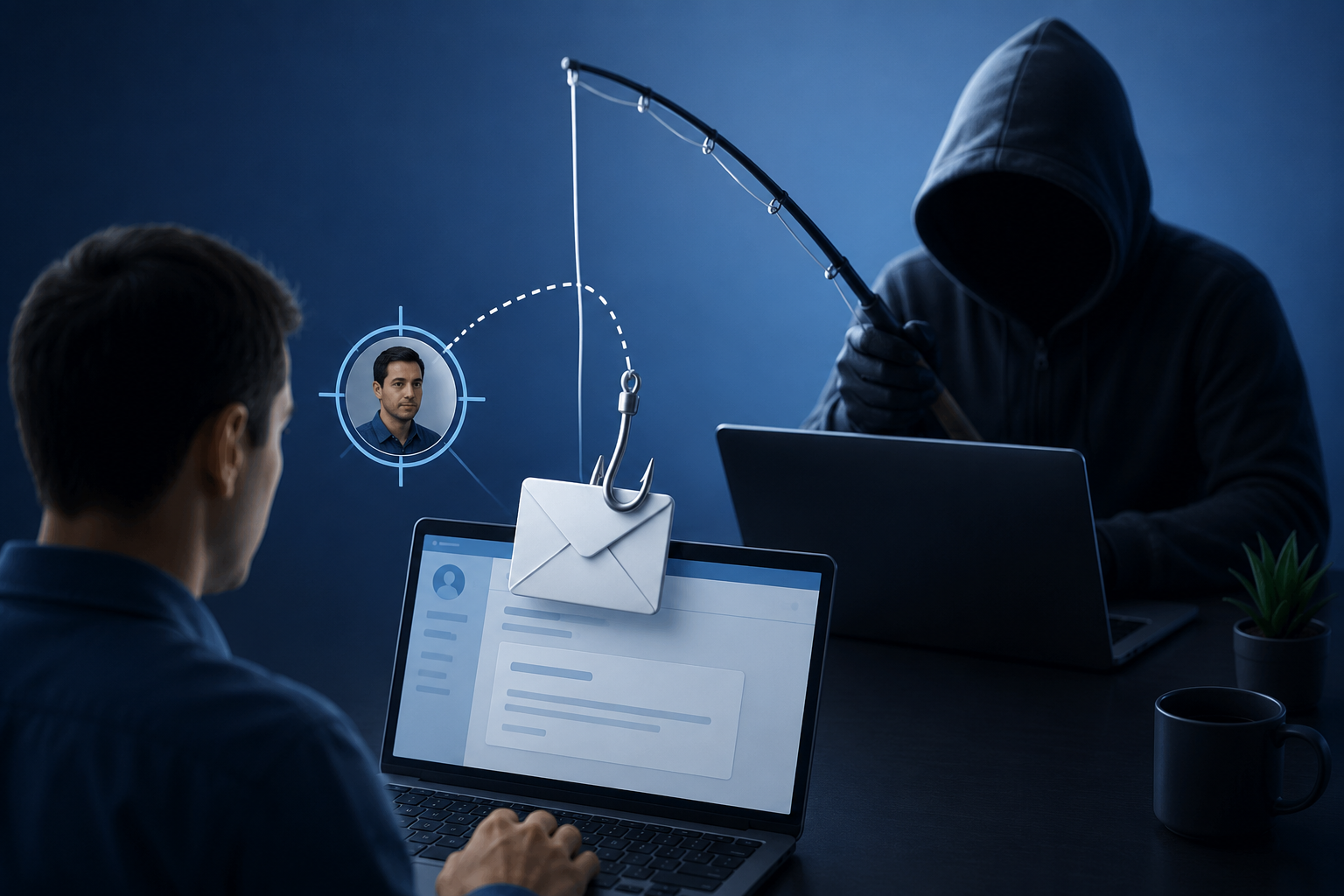
You can see how this flows you are educated then. Spear phishing is one of the biggest threats in today’s cyberattack landscape, and it has gotten more sophisticated than ever. Spear phishing differs from the more general phishing frauds that target large swathes of people by being strategic and targeted. Cybercriminals stop the trickery data theft to induce the sufferer give up their non-public records or grant them get right of entry to a machine.
Such attacks are efficient but the hardest to detect because they appear legitimate and tailor-made. Understanding how spear phishing operates what is more common examples of it enables you and your business to defend yourselves against major security incidents.
What Is Spear Phishing?
Cyber protection built for today
One of the specific types of cyber-attack is spear phishing which involves impersonation, where an attacker tries to mimic a legitimate person or business as well via emails to convince their target (you) to furnish sensitive information under the pretense, clicking on malicious links and/or downloading malware.
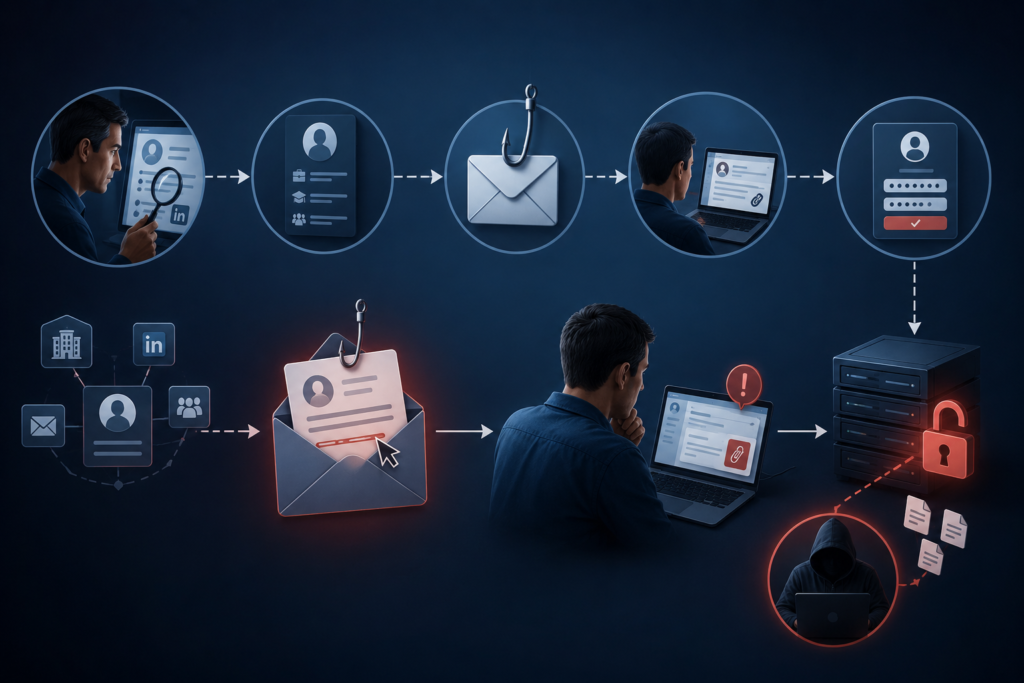
A spear phishing attack can be an email sent to a specific victim in comparison to a phishing email which files against thousands of random users. First, attackers will often perform their reconnaissance and research based on data that is available – often publicly – from social media, company websites, or other previous breaches in the same organization.
Spear phishing aims to extract directly or indirectly (through social engineering) login credentials, financial and personal dox sensitive business data, or access to secure systems.
How Does Spear Phishing Work?
This is the crux of spear phishing social engineering tactics. Instead of going beyond the technical limits, attackers go away around them exploiting human trust.
It usually begins with research. Criminals gather information about the target such as name, job title, email address and whether his company is engaged in any activity. Until then, it can create messages that sound quite convincing.
Once they have collected enough information, the attacker will send an authentic email or text. It might look like it was dropped into your inbox from a manager, peer, bank, vendor, or trusted party.
Usually, it carries an element of urgency or compulsion and directs the victim to perform an action without validation on whether the requestor is genuine or not. Common tactics include:
- Requesting password reset
- Requesting wire transfers
- Phishing fake invoices
- Sending virus/certain malware through attachments
- Phishing and how does it work phishing users on realistic login pages
Attackers can gain access to accounts, networks, or sensitive information if a victim bites the worm.
Phishing and Spear Phishing
Answer: Phishing and spear phishing both are fraudulent messages sent; however, the major difference is that it targets a specific person.
Phishing is a general and well-known type of attack. The attackers then send that same message to thousands, in the hope that some small percentage of recipients will respond.
But spear phishing, which is targeted only to that person as compared to other types of phishing. The attacker focusses on one person or organisation by using highly custom-made information to make it more credible and successful.
The personalization aspect allows spear phishing attacks to be far more threatening and much less detectable.
Common Examples of Spear Phishing
The types of Spears Phishing The different types of spear phishing attacks are very specific due to the end-user and objective of an attacker.
Fake Executive Emails
One common example is impersonating a company executive or CEO by an attacker. Example: Hacker sends an email asking for secret payment, financial data, or account credentials.
That may not even be a real order, but because it looks like the sort of thing senior leadership would say, employees may operate as if it is true.
Fraudulent Vendor Requests
Additionally, attackers can impersonate reliable suppliers or merchants. Example: finance department gets mail containing fake invoice with altered ones due payment details.
The way the payment works is that the funds are paid directly from your account, straight to the attackers when you finish.
Fake Login Pages
An instance would be a victim getting emails to log in to his company account or change passwords. You click the link, and it directs you to a bogus site where when you log in, they will try to steal your credentials.
These pages are also many times indistinguishable from real web sites.
Malware Attachments
Spear phishing emails also come with attachments that contain files posing as invoices, reports, or other business documents. He opens the attachment, and bang malware or ransomware is as good as installed on his machine.
There is also the possibility of data theft, of leaving compromised systems or a shutdown for the whole network.
The Dangers of Spear Phishing
Working on the fact that people are trusting and it manipulates human elements spear phishing is aimed at success. The attack is also more believable to victims because it is personalized.
However, as we have seen with the recent Sony breach, this is not fail-safe: if staff members are persuaded to provide their credentials or open a malicious file then irrespective of how many other technical security measures you have in place it will be a problem.
Successful spear phishing attacks can have trainees teach more on:
- Monetary loss
- Data breaches
- Identity theft
- Business disruption
- Reputational damage
For enterprises, just one successful attack can help target networks and even release. Sensitive customer information.
How To Realize You Are Under the Attack of Spear Phishing
Spear phishing messages are convincing but often have indicators that point to foul play.
But do be careful about any requests for sensitive information you were not expecting. People also need to be vigilant about urgency or pressure being placed in emails; that is another back flag.
In the case of suspicious mail also beware of unusual sender addresses, misspellings as well as links or attachments you were not anticipating.
Even if the message purports to be from someone you recognize, always confirm such a request through another channel before executing it.
Spear Phishing Prevention
To stop spear phishing, you need technical security and employee education.
In such cases, the best response is two-factor authentication, which adds an additional layer of protection when credentials are compromised.
Employee training is equally important. Staff should receive training about checking whether a request or message is related to phishing; clicking on an unknown link or attachment from the email is best avoided.
They also need to ramp up anti-spam management, endpoint fraud detection, and continued vigilance of their networks for intrusion.
Updating software and systems also helps defend against malware delivered through phishing campaigns.
Protect Your Business with Advanced Cybersecurity
Spear phishing attacks are becoming more targeted and dangerous, making strong cybersecurity essential for every business. Secure Your Business with Pexo IT Consulting Services and stay protected with advanced threat detection, email security, endpoint protection, and employee awareness training. Their expert team helps businesses reduce cyber risks, prevent data breaches, and build a stronger defense against modern cyber threats.
Conclusion
Spear phishing is known to be the most lethal type of cyber-attack that exploits trickery, customizability and social engineering against a specific individual or target corporation. Unlike phishing frauds, these attacks are designed to appear reasonable and trustworthy.
Understanding what spear phishing is, how it works, and seeing some examples are all part of reducing exposure to this kind of attack. In either case, individual users and large organizations alike must utilize proper cybersecurity processes to keep digital security high as well.