Why Is Cybersecurity Risk Assessment Important?

Cyber threats are neither an isolated nor timid event anymore, and businesses of all magnitudes and sectors in general have almost become used to the everyday exposure. Ransomware attacks and phishing scams are not the only attempts to expose organizations to pressure; they have to find a way to protect their digital property on a regular basis because their vulnerabilities to attack can be due to an insider or a systematic system.

This is where cybersecurity risk assessment will be necessary. It assists the companies in going beyond the idea of reactive defence to a proactive and strategic one, recognizing the threats before they become expensive attacks on the companies.

Knowledge of Cybersecurity Risk Assessment.

Cybersecurity risk assessment is a systematic approach of identifying, analysing, and ranking risks that have the potential to affect the information systems, data, and business of an organization. Rather than concentrating on technical shortcomings, it analyses the larger picture, i.e., people, processes, technologies, and external dependencies.

Basic Elements of a Cybersecurity Risk Assessment.

A successful assessment goes across several levels of the digital landscape of an organization:

1. Asset Identification

This level will involve the process of cataloguing some critical assets, and these will include:

  • Customer and employee data
  • Business-critical applications
  • The hardware, servers, and cloud infrastructure.
  • The perception of the value of the assets can be used to know which systems might need the utmost protection.

2. Threat Identification

Threats that can be encountered by an organization include (the organization should identify the potential sources of threats):

  • Malware and ransomware
  • The social engineering attack and the phishing attack.
  • Risks of insiders (including normal and malicious)
  • Third-party and supply chain risks.

3. Vulnerability Analysis

Threats may take advantage of the vulnerabilities that constitute weaknesses. This can include obsolete software, a correctly configured system, or even the use of unsecured passwords or a lack of knowledge by the employees.

4. Impact Analysis

This step takes into account the consequence of a threat based upon a vulnerability; a successful outcome of the vulnerability helps it to be exploited, causing a financial loss, damage to reputation, operations downtime, or non-compliant compliance.

5. Risk Mitigation Planning

Finally, the organizations strategize on reducing, delegating, accepting, or avoiding the perceived risks through technical control means, policies, and training.

Why Cybersecurity Risk Assessment Matters.

1. Eliminates high-priced Data Violation.

The consequences of cyber incidents may include huge financial losses in the form of downtime, ransom, legal expenses, and consumer churn. The risk assessments can reveal the weak areas at an early stage, which minimizes the chances of major security events.

2. Strengthens Decision-Making

Businesses do not need to blindly invest in security tools or allocate resources to what is really at risk. This ensures security budgets are deployed in areas of greatest need.

3. Helps Improve Regulatory Compliance.

There are numerous rules (GDPR, HIPAA, PCI DSS, and ISO/IEC 27001) that require organizations to identify and address cybersecurity threats. The frequent evaluations are useful to prove conformity and prevent fines.

4. Guarantees a Business Reputation.

Trust is fragile. One cyber attack will leave an indelible mark on the confidence of customers. Risk proactivity protects brand credibility and relationships in the long run.

5. Enhances General Cybersecurity State.

Cybersecurity is not static. Continuous evaluation aids organizations in adapting to evolving threats and technology, as well as changes in business.

When Should a Cybersecurity Risk Assessment Be Performed?

Organizations are also encouraged to make evaluations during the critical times, and they include:

  • Prior to the new technologies or cloud platforms.
  • After major changes in the infrastructure/software.
  • Once there is a security incident or a security near-miss.
  • In the event of new compliance/regulatory requirements.
  • Vendors or suppliers are being onboarded.
  • Periodic timeline (i.e., quarterly or annual).

Top-Tier Processes in Performing a Cybersecurity Risk Assessment.

  • Preparation: Figure out what needs to be prepared, the extent, resources, and compliance requirements.
  • scope definition: Determine systems, data, people, and processes involved.
  • Risk Identification: Threat intelligence and past occurrences.
  • Risk Analysis and prioritization: It involves an evaluation of the probability, impact, or a quantitative or qualitative evaluation of probability.
  • Communication & Action: Document the risks and write them in the documentation, prescribe controls, and monitor mitigation activity.

Although internal teams are highly essential, having the advice of experts helps in most instances when organizations address complex cyber risks. The professional cybersecurity service organizations provide employees with specialized equipment, experience, and models to conduct a comprehensive risk analysis and take effective protective measures.

The vulnerability testing, penetration testing, compliance services, and continuous monitoring are services that assist businesses to reinforce defences and counter cyber threats as they evolve to remain resilient. To delve into thorough cybersecurity solutions, go here.

Conclusion

Cybersecurity risk assessment is no longer an option; it is a very important business practice in the digital arena. Through vulnerability identification, threat assessment, and prioritization of mitigation measures, the organizations are able to limit financial losses, continue to comply, and even safeguard their reputations. Periodic evaluations enable businesses to make sound security choices and establish a sustainable security stance that improves with the architecture of the threats. The current risk assessment can save much more losses in the future by investing time and resources in the exercise.

Difference Between Cyber Security Vs. Information Security

Nowadays, data has become extremely valuable due to a nation’s increasing interconnection over the internet. If companies want to protect themselves and comply with the law, specialists should ensure the data is secured against unauthorized access, data leaks, or misuse.

Information Security and Cybersecurity are the two main pillars of such protection. Knowledge of their differences enables organizations to develop a multifaceted, multilayered security architecture. Technical security models state that Information Security is a broader field, and cybersecurity is a specific practice area that addresses digital risks and defends cyberspace.

What is Cyber Security?

Cybersecurity is the art or science of protecting computer systems, networks, and applications, and securing data against malware, ransomware, phishing, and unauthorized access. It focuses on the cyber sphere, the area where information is recorded, processed, and transmitted electronically.

It involves the use of advanced technology resources, infrastructure, and response capabilities to identify, prevent and react to attacks of digital infrastructure. These are common cybersecurity practices, which are:

●          Intrusion Detection systems/ intrusion prevention systems.
●          Software of network intrusion detection.
●          Security event monitoring information management (SIEM).
●          Identity and Access Management (IAM).

The primary goal of cybersecurity is to safeguard digital assets and systems that are related to the network against new threats.

Benefits of Cyber Security

●          Computer-based crime and Internet fraud insurance.
●          Securing cloud and web environments as well as mobile environments.
●          Response to incident and real time threat/detection.
●          Business continuity in digital business.

Information Security: What is it?

Information in all its forms, be it digital, physical, or verbal, should definitely be included in the materials that Information Security (InfoSec) protects from unauthorized viewing, changing, sharing, or destruction. It is grounded on 3 fundamental principles:

●          Privacy – Site security by keeping unwarranted people out.
●          Integrity -Ensuring data safety and consistency.
●          Availability -The data should be available when needed.

Just as there is no information security in the virtual world, there is no cybersecurity either. It also includes:

●          Physical security controls
●          Administrative policies and procedures.
●          Corporate compliance and risk management.
●          Supervision and management of data.

Information security, including cybersecurity, is not an independent strategy.

Advantages of Information Security:

●          The information of any type that is kept secret.
●          Regulatory and legal standards (e.g., ISO 27001, GDPP, HIPAA).
●          Decreased chances of insider threat and data leakage.
●          Risk management and good governance.

Difference Between Cyber Security and Information Security

AspectCyber SecurityInformation Security
DefinitionProtecting the digital systems, including networks and data, from cyber attacksProtecting information in all forms from unauthorized access
ScopeOnly Limited to cyberspaceBroader domain that includes cybersecurity
Security FocusDigital threats such as malware, phishing, and ransomwareConfidentiality, integrity, and availability of all data
Data ProtectionProtects only digital dataMainly protects digital, physical, and verbal information
ApproachTechnology-driven and operationalRisk management, governance, and control-driven
Threat CoverageHacking, DoS, advanced persistent threatsData leakage, unauthorized disclosure, and physical theft
ImplementationFirewalls, SIEM, endpoint protectionPolicies, access control, encryption, compliance frameworks
DomainCyber environmentOrganizational and enterprise-wide
RelationshipSubset of Information SecuritySuperset that includes cybersecurity

Information Security and Cyber Security Relationship.

Information security and cybersecurity are not some exclusive entities, but they are two sides of the same security solution, which are complementary to each other. Information security entails finding out the individuals or groups that require protection, what must be the kind of protection required and why should these measures be put in place.

Say a firm encrypts its database, reinvents its access control policies and physically secures its information hub. In that instance, it will be practicing information security.

In order to ensure data security against computer attacks and to have a well-developed system of cybersecurity, it is necessary to install endpoint detection and network surveillance systems.

Use Cases in Modern Enterprises

Cyber Security Use Cases

●          Protecting cloud applications and SaaS.
●          Ransomware attack prevention.
●          Securing the enterprise networks.
●          Incident response and threat hunting.

Information Security Use Cases

●          Designing data governance frameworks
●          Regulatory compliance and audit readiness
●          Business risk assessment
●          Secure document lifecycle management

Why Organizations Need Both?

●          The modern-day business is operated in a hybridized world where information is stored in:
●          On-premise infrastructure
●          Cloud platforms
●          Remote devices
●          Physical storage

Cybersecurity alone will lead to suboptimal policy implementation, compliance, and physical data protection, as well as to information security alone; despite robust cybersecurity, the digital infrastructure will remain vulnerable to sophisticated attacks.

A combined strategy ensures:

●          End-to-end data protection
●          Reduced attack surface
●          Improved resilience
●          Stronger stakeholder trust

How Pexo Helps Strengthen Your Cyber Security Strategy

Every properly working organization requires enterprise-level protection to leverage advanced solutions. Pexo provides a broad range of cybersecurity services, including vulnerability detection and management, cloud security, and risk management, most of which are tailored to the client’s current digital infrastructure. Based on real-time monitoring, regulatory compliance, and a scalable security architecture, Pexo helps enterprises protect against unknown cyber threats.

Conclusion

Information and cybersecurity remain two of the main pillars supporting data security, alongside many other security components, and therefore play a crucial role. Cybersecurity is basically about protecting cyber assets from cyberattack, while the major concern of information security, which is several notches above the former in terms of scope, is the protection of all kinds of information, and it is also controlled through governance, risk management, and control.

Understanding the differences between the two will enable an organization to develop a security architecture that is future-proof, resilient, and layered. Moreover, in a business context, the two should be integrated to provide the highest level of security in a permanently data-driven world, rather than treated as counterparts.

Backup vs Disaster Recovery: The Difference Explained

In today’s digital-first environment, organisations rely heavily on data and IT systems to operate efficiently. Any disruption, whether caused by cyberattacks, hardware failure, or natural disasters, can lead to serious financial and operational consequences. The current digital-first world relies on data and information technology to run organisations efficiently. Any interruption, either due to cyberattacks, the crash of hardware equipment, or a natural disaster, may result in significant financial and operational losses.

This blog is well written, explaining the difference between backup and disaster recovery, their mutual relationship, and how they support one another, and how relevant they are to long-term resilience.

Understanding Data Backup

In the data backup process, critical data is copied so it can be restored if a copy is lost, corrupted, or accidentally deleted. Backup is more of a plan, rather than an entire system recovery.

  • Backups are typically scheduled daily, weekly, or continuously and are stored independently of production systems.
  • Generally, Backup Characteristics.
  • Gives attention to data, not applications, and systems.
  • There is a rescue of lost data through deletion or corruption caused by an accident.
  • Normally automated and scheduled.
  • Saved in local machines, external storage, or on cloud systems.

What Is Disaster Recovery?

Disaster recovery is a comprehensive plan to restore the entire IT infrastructure after a major incident. This involves information, applications, servers, network settings, and business processes.

A disaster recovery plan has two essential metrics to be built on:

Recovery Time Objective (RTO): The time required to restore systems to a functional state.

Recovery Point Objective (RPO): What is a tolerable amount of loss of data?

Unlike backup, disaster recovery is designed to reduce the time an organization is down and, once down, restore business operations to normal as quickly as possible.

Disaster Recovery Covers

  • System and applications restoration.
  • Location of information where it is fail overed or backup infrastructure.
  • Business continuity practices.

Backup vs Disaster Recovery: Key Differences

The major differences that are discernible in simple terms are as follows, in order to bring out the point:

Purpose:

  • Backup protects data
  • Disaster recovery restores full operations.

Scope:

  • Backup deals with files and the database.
  • Disaster recovery involves systems, applications, and infrastructure.

Recovery Speed:

  • Backup restores data, typically performed manually.
  • Implementing disaster recovery would enable rapid, automated recovery.

Downtime Coverage:

  • Backup does not cancel downtimes.
  • Disaster recovery is meant to reduce downtime.

Benefits of Data Backup

An effective backup plan offers a business a number of advantages:

  • Avoids data loss that is not easily recoverable.
  • Enhances the quick recovery of small incidents.
  • Guarantees against ransomware and cyber attacks.
  • Contributes to compliance with requirements and regulations.
  • Minimizes loss of money through downtime.
  • It gives comfort and financial security.

What Is Considered a Disaster?

Under IT, a disaster is any unforeseen event that disrupts systems, access to data, or the business.

Common examples include:

  • Earthquakes or floods are natural catastrophes.
  • How a malfunction happens in hardware or software.
  • The examples include cyberattacks such as ransomware attacks or data breaches.
  • Misconfigurations or accidental deletions. Human errors.
  • Electricity cuts and construction breakdown.
  • Environmental problems or physical security violations.

How Disaster Recovery Works

Risk assessment and business impact analysis are a starting point for disaster recovery. Organisations determine which systems are critical and what levels of downtime and data loss are acceptable.

  • The overall process that is likely to be involved is:
  • Reproduction and backup of the system.
  • The failover infrastructure (cold, warm, or hot prices)
  • Automated recovery tools
  • Recovery practices that have been well documented.
  • Test regularly and review the plan.

Why a Disaster Recovery Plan Is Essential

A disaster recovery plan is not optional—it is a business necessity.

Key advantages include:

  • Purchases operational continuity.
  • Reduces time and loss of revenues.
  • Enhances resilience to cybersecurity.
  • Helps with legal and compliance requirements.
  • Grows contact with customers and all stakeholders.
  • Calms down panic when there is a crisis.
  • Backup and disaster recovery provide a layered defence against data loss and business failure.

Protect Your Business with Pexo IT Consulting

Pexo IT Consulting provides secure, reliable Data Backup and Disaster Recovery solutions to keep your business running without interruption. With automated backups, fast recovery systems, and proactive monitoring, Pexo ensures your critical data and IT infrastructure stay protected and ready to recover quickly from any disruption.

Conclusion

The terms backup and disaster recovery are often used interchangeably, though they serve different purposes. Backup safeguards data, whereas disaster recovery helps ensure business continuity when a major disruption occurs. The use of backups is not sufficient to protect organisations against downtime and operational risks. By adopting a unified approach, business organizations can secure their information, streamline operations, and withstand uncertainty.

FAQs

1. Are they used interchangeably? True or false?

False. Backup is concerned with the possibility to repeat and recover the information, but disaster recovery is broader: it restores all systems and business operations in the case of the huge disruption.

2. What is the golden rule of backup?

Essentially, there is the golden rule of getting backups of the information in various places, such that the information can be recovered even when one of the backups fails.

3. What is the 3 2 2 backup rule?

The 3 2 2 backup rule is based on the idea of creating 3 copies of the data, which are saved on 2 types of storage, and two of them are saved in a different place, which is secondary, to offer additional protection.

4. What is the 4 3 2 backup strategy?

The 4 3 2 backup system employs four data copies, with three stored in three media, with the remaining two being stored off-site, which offers higher redundancy and resilience.

24/7 IT Support Explained: What’s Included and What’s Not

Consider this: In our modern, always-connected business world, downtime rarely waits for a convenient time frame. Systems can crash late at night, security risks can be discovered over the weekend, and staff might need assistance after hours. This is the reason organizations choose to invest in IT support 24×7; a service that promises IT assistance around the clock.

But the notion of 24/7 support is not always what it seems. Some of the providers include full 24/7 support, whereas others do provide some limited after-hours assistance. Be very clear on what is (and is not) included before selecting a provider.

What Exactly Does 24/7 IT Support Mean?

Essentially, 24/7 IT support means that there is someone in your service provider who is available to answer, evaluate, and resolve technical issues, regardless of the time of day or night. It does not also mean every issue is going to get fixed right away. Instead, most providers, use a system of triaging problems based on urgency and severity.

Real 24/7 support model, should include a helpdesk team, monitoring, escalation and SLA. These features guarantee that critical matters are resolved on a priority basis while less critical problems are scheduled wherever appropriate.

What Is 24/7 IT Support Included In

Despite the differences in service packages, trustworthy providers provide a few functionalities as part of a 4 standard service package to ensure system stability and business continuity.

Round-the-Clock Helpdesk Access

One of its advantages is its round-the-clock availability of IT professionals. Support channels here would consist of phone, email, ticketing portals, and live chat. This allows employees to report any issues now of the incident, without the need to wait until business hours.

Ticket Management and Incident Tracking

When a problem is reported, it is entered into a system that allows for tracking the issue from start until it is resolved. This serves to hold people accountable, to be transparent, and provide users the updates as when they would like to receive it.

Priority-Based Response Times

Support providers categorize issues based on their level of severity. Business-critical outages are resolved immediately while low priority issues are resolved as per the stipulated timelines.

Remote Troubleshooting and Resolution

Most IT problems can be fixed remotely, allowing the time to quickly diagnose problems without making a trip to the site.

Monitoring and Alert Management

A common component of an IT disaster recovery plan is the 24/7 monitoring of servers, networks, and applications. It allows IT teams to respond before these disruptions ever happen; these systems find potential problems in their infancy.

Escalation to Specialized Teams

Any problem that needs specialist work is passed on to senior level engineers who can solve more complex technical problems quicker.’

What’s Usually NOT Included

However, contrary to the name there are some services that do not come under the title of 24/7 IT support. Knowing what is not covered can help avoid surprise expenses or confusion.

Immediate Onsite Support

Most providers prioritize remote resolution. In-person visits are usually booked differently or as an ancillary offer.

Large IT Projects

Projects, such as significant upgrades, migrations, or system implementations are generally considered project work and billed separately.

Third-Party Software Support

If something goes wrong involving an external vendor, you can expect your providers to help with troubleshooting, but they often cannot control the response time or the fix from the vendor side.

Hardware Replacement

Support teams might identify hardware issues but they will not replace them unless another contract made or a warranty is still in play.

Non-Managed Systems

Outside of the agreed upon service scope, devices or software are typically not supported.

Why Clear Service Agreements Matter

A good service level agreement is vital, so you know exactly what your provider delivers. It should also include target response times, escalation procedures, operating hours, and exclusions. In this situation, organizations tend to believe that they have complete coverage, only to find out later that there are only partial support through an implicit acceptance of risk.

Boost Efficiency with Pexo IT Consulting’s Managed IT Services

For organizations seeking a reliable, flexible IT solution, Pexo IT Consulting provides everything needed to meet the contemporary demands of business. A dedicated support team that is responsible for the crucial monitoring, issue identification and the resolution of incidents, and other scalable IT services to reduce downtime and increase operational efficiency.

Reasons to Invest in Authentic 24/7 IT Support

Those organizations that opt for extensive support services take advantage of the following:

  • Lower system downtime and faster resolution of issues
  • Increased   productivity of workers
  • More intense cybersecurity surveillance
  • Enhanced operational continuity

Caveat: Business Leaders Are Probably Justified In Not Having This Feature On Their Radar

These advantages make 24/7 support a great reward, especially if your business is largely dependent on digital infrastructure.

  • Assessing a 24/7 IT Support Provider
  • Ask the right questions before signing an agreement:
  • WHO ANSWERS AFTER-HOURS CALLS?
  • What are the   response times guaranteed?
  • Which issues do government officials immediately work to address?
  • Does it offer monitoring and security services?
  • On what services are you charge an extra fee?

Answers to these questions can clarify your expectations versus what they are able to deliver.

Conclusion

24X7 IT Support is crucial for the smooth functioning of the business and protection of vital systems. But you don’t get the same support from every provider. Most are vague and include access to helpdesk, monitoring and escalation process whilst leaving out onsite, big project and hardware replacement unless you state otherwise.

Taking care in reviewing service agreements and clarifying exactly what is (and is not) included allows businesses to select a provider that accurately represents their operational requirements.

FAQs

Is every single issue fixed in an instant with 24/7 IT support?

No. Providers typically rank issues by severity and only get to critical problems.

Does System Monitoring come with all plans?

Not always. With many providers, Monitor is a paid or complimentary and optional extra service.

Is onsite visit included in 24/7 assistance?

Onsite support is usually scheduled separately unless it is part of a high-end package.

How Do Businesses Steer Clear of Surprise Bills?

Mostly by going through the SLA with a fine tooth comb and ensuring that everything is written down everything that is included and excluded, prior to signing.

Cloud Transformation: Definition, Strategy, and Benefits

In the modern digital-first economy, organisations cannot cling to legacy IT systems to remain competitive. The speed and flexibility are required by rapid innovation, customer demands, and emerging security threats. It is at this point that cloud transformation has been instrumental in helping companies modernise operations, gain agility, and build long-term resilience.

Cloud transformation is not a situation an organisation has gone through once technology has changed, but a strategic process that reflects the restructuring of an organisation’s technology use to create value.

What Does Cloud Transformation Mean?

Cloud transformation is the re-evaluation and redefinition of the IT-based environment in an organisation through the implementation of cloud-based technologies. It does not just entail transferring applications between on-premises servers and the cloud. Rather, it involves the updating of systems, utilisation of data to its utmost level, enhancement of security and achievement of compatibility of technology with the business objectives.

The successful cloud transformation usually includes infrastructure, workflow, governance model and even culture modification. The goal does not only involve technical enhancement, but quantifiable business influence.

Cloud Transformation vs. Cloud Migration

These two terms, however, are not equivalent as commonly practised.

Cloud Migration involves transferring workloads, data, or applications to the cloud.

Cloud Transformation is more strategic and broader. It also covers modernisation, cloud-native development, and operational optimisation, as well as advanced security practices, in addition to migration.

Migration is a part of the greater transformation roadmap, rather than a destination.

Why Cloud Transformation Matters for Modern Businesses

Institutions that seek cloud transformation can respond swiftly to market and customer demands. More to the point, they establish a background of constant innovation and not temporary solutions.

Some of the reasons why businesses invest in cloud transformation are:

  • The products and services have a better time-to-market.
  • More productive utilisation of information to make decisions.
  • Greater performance of operations.
  • Better reliability and resilience of the systems.

Core Benefits of Cloud Transformation

Similar to any other transformation, cloud transformation offers tangible and long-term organisational-wide benefits:

1. High Operational efficiency.

The cloud platforms minimise data silos and concentrate on the availability of information. The teams will be able to work more efficiently, automating repetitive processes, and spend time on jobs with higher value than maintenance of the infrastructure.

2. Scalability on Demand

The conventional IT environments involve an initial investment in equipment and capacity design. Clouds enable companies to automatically increase or decrease resources on demand in real time without having to over-provision them.

3. Cost Optimisation

Businesses can manage IT expenses better by not spending on capital outlay but on a usage-based pricing mechanism. Cloud services also reduce hardware maintenance, software upgrades, and physical infrastructure management.

4. Higher levels of Security and Compliance.

Most popular cloud networks are developed with enhanced security measures, encryption, and identity management and monitoring systems. This assists organisations in reinforcing the security of information and fulfilling regulatory obligations in a more productive manner.

5. Improved Reliability and Business Masters.

Cloud solutions allow redundancy, automatic back-ups and disaster recovery plans. This enhances on-time performance, and critical systems will not fail even in cases of sudden interruptions.

The Five Major Stages of Cloud Transformation.

The planned strategy will minimise the risk and ROI. The majority of cloud transformation programs use the following five phases:

  1. Evaluation and Strategy formulation.

Test existing IT systems, business objectives and technical preparedness. Identify success by description and develop a roadmap for change.

  1. Cloud Model and provider choice.

Select optimal cloud model and cloud provider in regard to scalability objectives, compliance requirements, and abrasion needs.

  1. Migration and Modernisation Migration and Modernisation.

Migrate data and applications, and update architectures where required. This can be refactoring age-old systems or adopting cloud-native solutions.

  1. Implementation of Security and Governance.

Implement identity access control, data governance policies and security monitoring as a way of securing cloud environments.

  1. Optimisation and Continuous Improvement.

Track the results, control the expenses and constantly perfect the use of cloud in order to achieve better performance and business results.

Investing Strategy into Action with Master Mastery.

However, as much as cloud transformation has a lot of potential, the lack of expertise is likely to result in higher costs, breaches of security and underutilization of resources. Most companies can enjoy the services of professionals in the field of the cloud who can steer strategy, migration, and optimisation.

Developing a structured cloud journey requires a business to plan and execute it. Pexo offers Cloud Transformation Services to support businesses at every step, including strategy development, secure implementation, and continuous optimisation.

Final Thoughts

Cloud transformation is not transforming with the intention to use technology as an end in itself, but rather to attain smarter operations, enhanced security and business sustainability. The cloud, with the appropriate strategy and implementation, is an effective source of business success in the long term.

FAQs

1. What are the cloud transformation services?

The cloud transformation services assist organisations in planning, migrating, modernising, securing, and optimising their cloud environments. These services usually involve strategy formulation, migration, security applications, and cloud maintenance.

 
2. Which is an example of cloud transformation?

A case in point is a company that transitions on-premises servers to a hybrid cloud, modifies its old applications into cloud-native services and launches automated scaling and security monitoring as a business development requirement.

3. What are the 5 phases of cloud transformation?

 
The five phases are assessment and strategy, cloud selection, migration and modernisation, security and governance, as well as optimisation and continuous improvement.

4. What are the four types of cloud models?

The four types of clouds are public cloud, private cloud, hybrid cloud and multi-cloud that are tailored to accommodate various business and technical requirements.

Top 6 Benefits of Wireless Networking

Wireless networking has become the foundation of the present-day connectivity of both business and households. The need to have networks that are fast, flexible, and scalable continues to increase as organizations depend on the use of cloud applications, mobile devices, and remote work models. Wireless networking offers higher convenience, reduced complexity of infrastructure, and agility required in emerging workflows in modern digital environments, which is better than traditional wired systems.

The top 6 benefits of wireless networking will be listed below, and the insights about the best solutions will be provided to assist you in creating a reliable and futuristic network.


Top 6 Advantages of Wireless Networking

wireless network e1623100914313

1. Greater Flexibility and Mobility

The liberty of wireless networking is one of the most significant benefits of the technology. Customers can stay in contact without being tied to a desk or physical location. Both employees and the company can transfer between meeting rooms, collaborative spaces, or floors without interrupting access to applications and data.

Such flexibility comes in particularly handy in settings like offices, retail places, warehouses, and just about any healthcare facility where mobility has a direct effect on productivity. Wireless networking contributes to the contemporary work style as it is a mode of networking that allows fluidity and quicker decision-making.

2. Swift and Easier installation.

Wired infrastructures are complex to deploy, whereas wireless networks are straightforward. Cabling, drilling, and structural modifications are not required on a large scale, and this lessens the time taken to install and the disturbance to the normal operations.

In business cases where companies are moving to a new office or to temporary offices, a wireless network provides a quick solution and causes minimal downtime. A wireless network can be set up in just a short time with only an access point and secure configurations, even in homes and small offices, making it a feasible and efficient option.

3. Cost-Effective Infrastructure

In the short run and long run, the wireless networking system can be less expensive. By eliminating much of the cabling costs, installation costs are reduced, and continuous maintenance is usually less complex and less costly.

With the expansion of organizations, there is no need to install more physical infrastructure when adding users or devices to a wireless network. The cost can be kept under control, assisting growth since it is scalable, and therefore, wireless networking is a prudent investment for any innovative business, regardless of size.

4. Better Teamwork and Performance.

Wireless networking will enable collaboration because teams can work in a familiar environment regardless of location. The employees do not have to worry about ports or network cables, and can work together in meeting rooms, common areas, or even outdoors.

The given accessibility promotes cooperation, accelerated information exchange, and more active collaboration. Whenever employees are transferring files, pitching ideas, or working on common grounds, wireless connectivity can assist in eliminating obstacles and maintaining the smooth running of the work.

5. Scalable and Future-Ready

Scalability is an essential element in the planning of the network, and wireless networks are very effective in this aspect. For businesses that do not require many employees, scaling their operations by adding new devices or using IoT and innovative technologies makes it easy to expand with little effort.

The new wireless solutions are designed to support high-density devices and augment bandwidth requirements. This makes sure that your network is never unsatisfactory as your requirements change without any significant redesigns or expensive upgrades.

6. Real-time Remote and Hybrid Access.

Wireless networking is beneficial in terms of supporting the remote and hybrid work environment. Encrypted wireless connections and secure authentication mechanisms enable employees to access company resources from the comfort of their homes or other locations.

Wireless networks can be very effective at protecting against unauthorized access with appropriate security settings, such as firewalls, network segmentation, and VPNs, while maintaining very high performance. This guarantees the continuity of the business and the safety of data, no matter the user’s location.

Top Wireless Networking Solutions to Use

The quality of a wireless network’s design, equipment, and security is critical to its effectiveness. The standard wireless networking offerings are usually:

  1. Wireless access points with high-performance to provide regular coverage.
  2. Monitoring and optimization of network management is centralized.
  3. High security measures to curb insecurities.
  4. A necessary scalable architecture to support future development.

When these aspects are combined, businesses obtain a fast, reliable, and manageable network.

Secure and Scalable Wireless Network Solutions by Pexo

Wireless networking can only be fully benefited from through expert planning and implementation. Pexo provides all-round wireless network solutions to suit the requirements of contemporary businesses. Pexo provides organisations with secure, high-performance wireless networks that facilitate mobility, scalability, and remote access through professional assessment, design, and deployment. Their customized solution can guarantee you a stable connection and cannot possibly go against your security and business needs.

Conclusion

Wireless networking has revolutionized the essence of connecting, collaborating, and doing business, as well as all forms of interaction among companies and individuals. It is very flexible, easy to install, economical, and can be easily scaled to suit current environments. Wireless networks form the basis of digital expansion, whether in sustaining mobile workforces or making remote access secure.

What Does a Cybersecurity Company Do?

The world we live in today is digital-first, where businesses depend heavily on technology to function, communicate, and even grow. This dependence is both efficient and scalable, but it also creates significant risks. Cyberattacks are rising in frequency, complexity, and harmfulness, making it damaging even to businesses of different sizes and in various industries. This is where the cybersecurity company becomes extremely important.

Defining the purpose of a Cybersecurity firm

Basically, a cybersecuritycompany is a digital advocate of businesses. It determines the weak points of systems, curbs cyber attacks and uncovers suspicious activity, as well as assisting organizations to recuperate within a short period in case a breach ensues.

Cybersecurity is not a self-protective system; it is a continuous process that adapts to new threats.

Cybersecurity firms integrate technical and business planning with operational reactions to guarantee that organizations are able to conduct business without interruptions and loss of data.

Determining Risks and Vulnerabilities

Risk evaluation is one of the initial actions a cybersecurity company takes. There are no universal systems, data sets, and operational priorities in any business; hence, each organization has different security risks.

Cybersecurity is an area of investigation by cybersecurity experts on networks, devices, software, cloud environments, and human activities to reveal their weak points. These might be old systems, poorly set-up passwords, themselves, unprotected access points, or improperly configured cloud services. After identifying the risks, they are ranked by the impact they may cause, so businesses address the most unpleasant threats first.

Preventing Cyber Threats Before They Happen

Much attention to cybersecurity services is on prevention. Instead of imposing threats, cybersecurity firms implement robust layers of defensive measures that prevent attacks at the entry point.

This involves deploying firewalls, intrusion detection and prevention systems, secure authentication, encryption, and access controls. Security policies and best practices are also formulated by cybersecurity units to eliminate the possibility of human error, a common cause of security violations.

Obtaining Cloud and Digital Infrastructure

Due to the migration of firms to cloud computing, cloud security has emerged as a key task for cybersecurity firms. To secure the data and applications of the cloud environments and user access, special security measures are required.

Cybersecurity solutions include cloud security configuration, encryption of sensitive information, and data loss prevention measures. They also assist the businesses in adhering to regulatory and compliance needs, and remain flexible and scalable on the cloud.

24 Hour Monitoring Systems

Cyber threats are not time-based, and that is why they need to be monitored constantly. The cybersecurity firms offer 24/7 observation of systems and networks to identify abnormalities within the systems in real-time.

The constant analysis of logs, traffic and system functionality can ensure cybersecurity teams locate possible breaches in time, when in most cases there is not a lot of damage to be done.

Responding to Cyber Incidents

No system is immune to effective preventive measures, despite the high level of preventive measures in place. A cybersecurity firm intervenes when a security incident or cyberattack occurs and implements a pre-planned incident response strategy.

This entails containing the threat, eliminating harmful activity, identifying the root cause, and safely restoring systems. A timely and streamlined response to a disaster is critical in cutting down the downtime, loss of data, and saving the face of the organization. Issues of post-incident analysis by cybersecurity businesses are also meant to enhance protection as well as deter such attacks in the future.

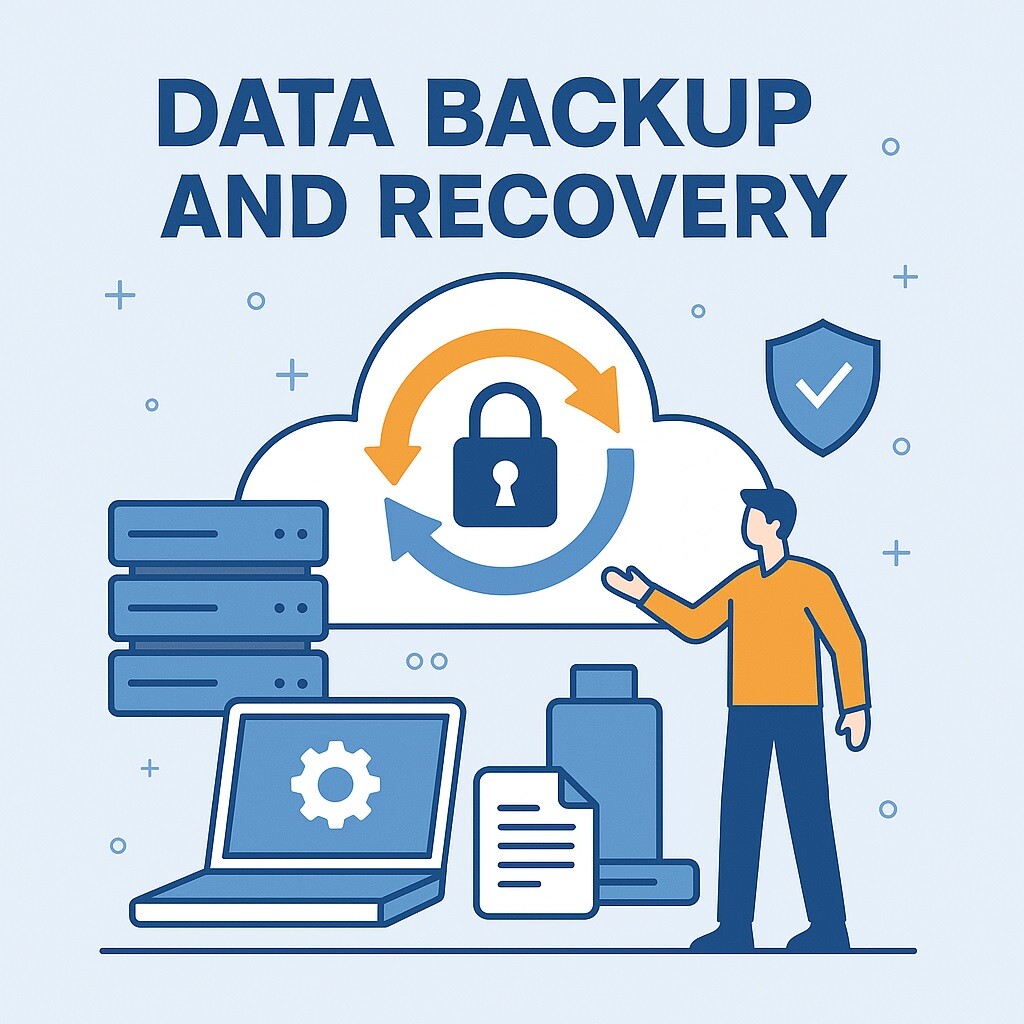
Data Backup and recovery support.

Learn about Data Backup and Recovery

Information is among the most productive resources of any company. This information is safeguarded through backup and recovery strategies provided by cybersecurity companies. Frequent backups also mean that the important data will be available to be restored quickly in case of any ransomware attack, system crashes, or unintentional loss.

Recovery planning considers business continuity reliance, bearing in mind that the business should be back on track as soon as possible following a disturbance. This will minimize monetary losses and maintain customer confidence.

Training Employees to Be Security-Aware

It is the technology that cannot assure cybersecurity. There is still the human error, which is

one of the largest security threats. Training programs can also be offered by cybersecurity companies to train employees on various frequent attacks, including phishing, social engineering, and unsafe web usage.

Pexo: A Proactive, All-in-One Cybersecurity Solution for Modern Businesses

The Pexo is an excellent solution for any business wanting to be proactive and organized about cybersecurity; Pexo provides all-encompassing solutions to secure the digital operations on various levels. Some of the specifics of Pexo are risk assessment and cloud security, as well as continuous monitoring, incident response, and recovery as fast as possible. Their cybersecurity solutions are packaged for the specific business environment that the business is in, and they are highly protective without any extravagance. Find out more about how Pexo can assist in protecting your organization by visiting there.

Why are companies in cybersecurity necessary now?

Large enterprises are no longer the only victims of cyber threats. SMBs are becoming a specific focus since attackers are aware that they do not usually have well-developed security measures. A cybersecurity company offers the skills, resources, and diligence to remain abreast of the ever-changing threats.

Through collaboration with a cybersecurity company, businesses have a sense of security, business continuation and can grow in the digital world, knowing that their systems, data and reputation are safe.

Final Thoughts

There is much more to cyberattack response than a cybersecurity company engages in. It develops a complete infrastructure of security services, which safeguards, monitors, and fortifies businesses in the long run. Since it is important that cybersecurity companies tackle risks and threats before they happen, timely responding to dangers and recovery in the aftermath of facts is crucial to the success of business in the modern world.

10 Easy Steps to Building a Culture of Cyber Awareness

Cyberattacks are a constant threat in today’s digital world. Phishing emails, malware downloads, and data breaches can cripple businesses and devastate personal lives.

Employee error is the reason many threats get introduced to a business network. A lack of cybersecurity awareness is generally the culprit. People don’t know any better, so they accidentally click a phishing link or create weak passwords, making it easy for hackers to breach.

It’s estimated that 95% of data breaches are due to human error.

But here’s the good news: these mistakes are preventable. Building a strong culture of cyber awareness can significantly reduce your risks.

Why Culture Matters

Think of your organization’s cybersecurity as a chain. Strong links make it unbreakable, while weak links make it vulnerable. Employees are the links in this chain. By fostering a culture of cyber awareness, you turn each employee into a strong link, making your entire organization more secure.

Easy Steps, Big Impact

Building a cyber awareness culture doesn’t require complex strategies or expensive training programs. Here are some simple steps you can take to make a big difference:

1. Start with Leadership Buy-in

Security shouldn’t be an IT department issue alone. Get leadership involved! When executives champion cyber awareness, it sends a powerful message to the organization. Leadership can show their commitment by:

  • Participating in training sessions
  • Speaking at security awareness events
  • Allocating resources for ongoing initiatives

2. Make Security Awareness Fun, Not Fearful

Cybersecurity training doesn’t have to be dry and boring. Use engaging videos, gamified quizzes, and real-life scenarios to keep employees interested and learning. Consider interactive modules where employees choose their path through a simulated phishing attack or short, animated videos explaining complex security concepts clearly.

3. Speak Their Language

Cybersecurity terms can be confusing. Communicate in plain language, avoiding technical jargon. Focus on practical advice employees can use in their everyday work. Instead of saying “implement multi-factor authentication,” explain it as adding an extra layer of security when logging in, like needing a code from your phone in addition to your password.

4. Keep it Short and Sweet

Don’t overwhelm people with lengthy training sessions. Opt for bite-sized training modules that are easy to digest and remember. Use microlearning approaches delivered in short bursts throughout the workday to keep employees engaged and reinforce key security concepts.

5. Conduct Phishing Drills

Regular phishing drills test employee awareness and preparedness. Send simulated phishing emails and track who clicks. Use the results to educate employees on red flags and reporting suspicious messages. After a phishing drill, review the email with employees, highlighting the signs that indicated it was a fake.

6. Make Reporting Easy and Encouraged

Employees need to feel comfortable reporting suspicious activity without fear of blame. Create a safe reporting system and acknowledge reports promptly. This can be done through:

  • A dedicated email address
  • An anonymous reporting hotline
  • A designated security champion employees can approach directly

7. Security Champions: Empower Your Employees

Identify enthusiastic employees who can become “security champions.” These champions can answer questions from peers and promote best practices through internal communication channels, keeping security awareness top of mind. Security champions foster a sense of shared responsibility for cybersecurity within the organization.

8. Beyond Work: Security Spills Over

Cybersecurity isn’t just a work thing. Educate employees on how to protect themselves at home too. Share tips on strong passwords, secure Wi-Fi connections, and avoiding public hotspots. Employees who practice good security habits at home are more likely to do so in the workplace.

9. Celebrate Successes

Recognize and celebrate employee achievements in cyber awareness. Did someone report a suspicious email? Did a team achieve a low click-through rate on a phishing drill? Publicly acknowledge their contributions to keep motivation high. Recognition can be a powerful tool that helps reinforce positive behavior and encourages continued vigilance.

10. Bonus Tip: Leverage Technology

Technology can be a powerful tool for building a cyber-aware culture. Use online training platforms that deliver microlearning modules and track employee progress. Schedule automated phishing simulations regularly to keep employees on their toes.

Tools that bolster employee security include:

  • Password managers
  • Email filtering for spam and phishing
  • Automated rules, such as Microsoft’s Sensitivity Labels
  • DNS filtering

The Bottom Line: Everyone Plays a Role

Building a culture of cyber awareness is an ongoing process. Repetition is key! Regularly revisit these steps, keep the conversation going, and make security awareness a natural part of your organization’s DNA. Cybersecurity is a shared responsibility. By fostering a culture of cyber awareness, your business benefits and equips everyone in your organization with the knowledge and tools to stay safe online. Empowered employees become your strongest defense against cyber threats.

Contact Us to Discuss Security Training & Technology

Need help with email filtering or security rules setup? Would you like someone to handle your ongoing employee security training? We can help you reduce your cybersecurity risk in many ways.

Contact us today to learn more.


Featured Image CreditUnsplash

This article has been republished with permission from The Technology Press.

4 Ways Small Businesses Can Leverage Copilot for Microsoft 365

What are some of the key differentiators that can propel small businesses forward? They include efficiency, productivity, and innovation. Microsoft has expanded the availability of one of its most dynamic tools to SMBs, a tool that can be a real game-changer for growth.

Copilot for Microsoft 365 is a powerful new addition to the M365 suite. It was first offered to enterprise customers only, but Copilot is now open to businesses of all sizes, as long as they have Microsoft 365 Business Standard or Business Premium.

Microsoft has positioned Copilot to revolutionize the way SMBs work. This innovative AI tool empowers users to generate creative content, streamline workflows, and unlock new levels of productivity.

Let’s explore the exciting possibilities Copilot unlocks for your growing business.

How Copilot Streamlines Workflows

Copilot leverages the power of large language models (LLMs). LLMs are AI models trained on massive datasets, enabling Copilot to understand natural language and generate contextual responses. It offers intelligent suggestions and content within your Microsoft 365 applications.

Here’s how Copilot translates this technology into real-world benefits for your small business:

Effortless Content Creation

Struggling with writer’s block or repetitive tasks like email writing? Copilot can suggest text responses, complete sentences, and even draft entire emails based on your initial input.

With just a few guiding prompts, your team can:

  • Craft compelling marketing copy
  • Write concise customer service responses
  • Create dynamic PowerPoint presentations

Enhanced Productivity

Copilot automates repetitive tasks and streamlines workflows by offering intelligent suggestions, freeing up valuable time for your employees. This allows them to focus on more strategic initiatives, high-value projects, or core business activities. Imagine automatically generating reports or automating data entry tasks—this unleashes your team’s energy for creative problem-solving and innovation.

Improved Communication and Collaboration

Clear and concise communication is vital for any successful business. Copilot facilitates this by suggesting relevant phrases, correcting grammatical errors, and ensuring consistent messaging across different applications.

Improved communication fosters better collaboration within teams, leading to streamlined project execution and enhanced client interactions.

Reduced Learning Curve for New Technologies

Copilot provides context-aware guidance and suggestions while you work with your familiar Microsoft 365 applications. This significantly reduces the learning curve for new employees, allowing them to become proficient in using the full potential of the suite more quickly. Imagine onboarding new team members with ease and empowering them to contribute meaningfully from day one.

Real-World Applications of Copilot within Your SMB

Copilot’s capabilities extend beyond generic productivity enhancements. Here’s a glimpse into how different roles within your SMB can leverage Copilot:

Marketing and Sales Teams

Generate compelling marketing copy for social media campaigns. Craft tailored sales emails with targeted messaging. Develop engaging presentations with Copilot’s creative text suggestions and language model capabilities.

Customer Service Representatives

Respond to customer inquiries with increased efficiency and accuracy. Use Copilot’s AI-powered suggestions for crafting clear and concise responses. Imagine resolving customer issues faster and fostering a more positive customer experience.

Project Managers

Develop comprehensive project plans. Automate progress reports with a few text prompts. Collaborate seamlessly with team members using Copilot’s intelligent features. Streamline project management and ensure everyone is on the same page from conception to completion.

Content Creators

Overcome writer’s block and generate fresh ideas for website copy. Teams can leverage Copilot’s help in brainstorming and content creation in many areas. Imagine producing high-quality content consistently, all while keeping modern audiences engaged and driving brand awareness.

Finance and Accounting Teams

Automate data entry tasks and improve data analysis with Copilot’s intelligent features. Generate reports with prompts for enhanced clarity. Imagine no more struggling to create reports—gain valuable insights from data faster.

Getting Started with Copilot for Microsoft 365

The good news is that Copilot for Microsoft 365 is readily accessible to SMBs. It integrates seamlessly with your existing environment. Here’s how you can empower your team to leverage this powerful tool:

  • Ensure Compatibility: Copilot is currently available for businesses with Microsoft 365 Business Premium or Business Standard.
  • Activate Copilot: Buy the Copilot add-on to your subscription. Then, as needed, contact your IT support team for help using it within your Microsoft 365 apps.
  • Explore and Experiment: Microsoft Copilot offers intuitive features within your familiar Microsoft 365 applications. Start experimenting with its capabilities and discover how it can enhance your workflow and productivity.
  • Invest in Training: Copilot is user-friendly, but you should still consider providing brief training sessions for employees. This helps ensure they understand the tool’s full potential and assists them in leveraging its capabilities effectively.

Improve Your Team’s Use of Microsoft 365

Copilot for Microsoft 365 is not just another software update; it’s a game-changer for small businesses. By embracing this innovative AI tool, you can unlock a new level of efficiency and empower your employees to achieve more.

Need some help from Microsoft 365 experts? Our team can guide you in using this resource to the fullest.

Contact us today to learn more.


Featured Image Credit

This article has been republished with permission from 4 Ways Small Businesses Can Leverage Copilot for Microsoft 365.