Are Your Smart Home Devices Spying On You? (Experts Say, Yes!)

n the digital age, data is the lifeblood of businesses. It fuels operations, decision-making, and customer interactions. But there is a dark underbelly of this data-centric landscape. It’s the persistent threat of data breaches.

The repercussions of a data breach extend far beyond the immediate aftermath. They often haunt businesses for years. Only 51% of data breach costs occur within the first year of an incident. The other 49% happen in year two and beyond.
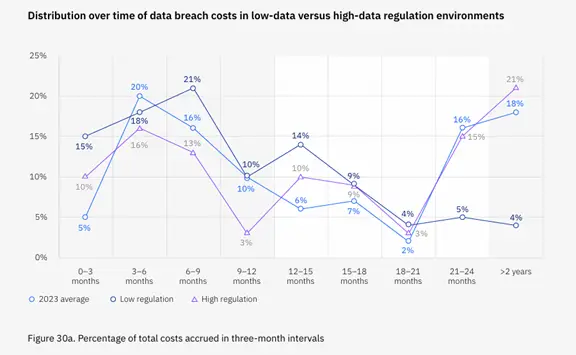
Data breach report
Are Your Smart Home Devices Spying On You? (Experts Say, Yes!) 3

Image source: IBM’s Cost of a Data Breach Report 2023

We’ll take a look at the long-term consequences of a data breach. As well as examine a real-world example. You’ll see how a single breach can have enduring implications. Ones that impact a business’s reputation, finances, and regulatory standing.

The Unseen Costs of a Data Breach

Introduction to the First American Title Insurance Co. Case

The 2019 cybersecurity breach at First American serves as a stark illustration. It reminds us of the far-reaching consequences of a data breach. In this case, the New York Department of Financial Services (NYDFS) imposed a $1 million fine. Cybersecurity sites announced the fine in the fall of 2023. The company’s fine was for failing to safeguard sensitive consumer information.

The breach exposed over 880 million documents. These files contained personal and financial data. The breach represented a significant violation of data protection standards.

This is one example of how costs can come long after an initial breach. Here are some other ways security incidents can haunt businesses for years.

Lingering Impacts of a Data Breach

Financial Repercussions

The financial toll of a data breach is significant. Immediate costs include things like:

  • Breach detection
  • Containment
  • Customer notification

Beyond those, businesses face long-term expenses. These relate to legal battles, regulatory fines, and reparations. Regulatory penalties are just one facet of the financial repercussions. Others include potential legal actions from affected individuals, as well as class-action lawsuits adding to the monetary strain.

Reputation Damage

The impact on a business’s reputation is arguably the most enduring consequence. Customers lose trust in a company’s ability to protect their sensitive information. This loss of trust can result in a decline in customer retention, acquisition difficulties, and long-lasting damage to the brand image.

Rebuilding a tarnished reputation takes time and concerted efforts. These may involve public relations campaigns and enhanced security measures to assure stakeholders of renewed commitment to data protection.

Regulatory Scrutiny

Regulatory bodies increasingly hold businesses accountable for safeguarding consumer data. A data breach triggers regulatory scrutiny, which may lead to fines and ongoing compliance requirements.

Regulatory authorities take a stringent stance on data security and on companies that fail to meet cybersecurity standards. The fallout includes financial penalties, increased oversight, and mandatory security improvements.

Operational Disruption

The aftermath of a data breach disrupts normal business operations. Companies must take remediation efforts and implement enhanced security measures, which can divert resources away from core business functions.

The company feels the impact across departments, affecting productivity and efficiency. The ripple effect of operational disruption can extend for years, impeding growth and hindering the organization’s ability to adapt to market changes.

Customer Churn and Acquisition Challenges

A data breach often leads to customer churn as individuals lose confidence in the business’s ability to protect their data. Acquiring new customers becomes challenging, as potential clients are wary of associating with a brand that has suffered a breach. The prolonged effects on customer acquisition can hinder the company’s growth and market competitiveness.

A Cautionary Tale for Businesses Everywhere

The repercussions of a data breach extend far beyond the immediate incident. They can impact the financial health, reputation, and regulatory standing of a business for years.

As the frequency and sophistication of cyber threats continue to rise, proactive cybersecurity measures are not just a necessity. They are a strategic imperative for safeguarding the long-term success of businesses.

The true cost of a data breach is not always immediately evident. It’s a complex interplay of financial penalties, reputation damage, regulatory consequences, and operational disruption. These impacts can persist for years. It’s important to learn from real-world examples and focus on robust cybersecurity measures to mitigate the risks associated with data breaches, safeguarding both immediate interests and long-term viability.

Need a Cybersecurity Assessment to Prevent an Unexpected Breach?

There are many ways that hackers can breach a network. From endpoints to cloud tools, you must run a tight security ship. Need some help?

Schedule a cybersecurity assessment today. This is the first positive step into understanding and addressing your risk, as well as avoiding the consequences of a data breach.

Give us a call today to schedule a chat.

This Article has been Republished with Permission from The Technology Press.

7 Common Pitfalls When Adopting Zero Trust Security

Zero Trust security is rapidly transforming the cybersecurity landscape by moving away from traditional perimeter-based security models. In this approach, every connection attempt is continuously verified before granting access to resources.

56% of global organizations say adopting Zero Trust is a “Top” or “High” priority.

This approach offers significant security advantages but also presents several potential pitfalls. Encountering these can undermine a company’s cybersecurity efforts. Below, we’ll explore these common roadblocks and offer guidance on successfully adopting Zero Trust security.

Remembering the Basics: What is Zero Trust Security?

Zero Trust discards the old “castle and moat” security model, where trust is assumed for everyone inside the network perimeter. Instead, it assumes everyone and everything is a potential threat, even users inside the network. This rigorous “verify first, access later” approach has the following key pillars:

  • Least Privilege: Users are granted access only to the specific resources necessary for their roles.
  • Continuous Verification: Authentication is an ongoing process with constant re-evaluation of access rights.
  • Micro-Segmentation: The network is divided into smaller segments to limit damage in case of a breach.

Common Zero Trust Adoption Mistakes

Zero Trust isn’t a product you can simply buy and deploy. Here are some common missteps to avoid:

Treating Zero Trust as a Product, Not a Strategy

Zero Trust is a security philosophy requiring a cultural shift within your organization, not just a product to purchase. It involves various tools, such as multi-factor authentication (MFA) and advanced threat detection.

Focusing Only on Technical Controls

While technology is crucial, Zero Trust’s success also depends on people and processes. Train employees on the new security culture and update access control policies. The human element is vital in any cybersecurity strategy.

Overcomplicating the Process

Don’t try to implement everything at once; this can be overwhelming. Start with a pilot program focusing on critical areas, and gradually expand your Zero Trust deployment.

Neglecting User Experience

Zero Trust should not create excessive hurdles for legitimate users. Implement controls like MFA thoughtfully to avoid frustrating employees. Balance security with a smooth user experience and use change management to ease the transition.

Skipping the Inventory

You cannot secure what you don’t know exists. Catalog all devices, users, and applications before deploying Zero Trust. This helps identify potential access risks and provides a roadmap for your efforts.

Forgetting Legacy Systems

Older systems must not be left unprotected during your Zero Trust transition. Integrate them into your security framework or secure them through migration plans to avoid potential data breaches.

Ignoring Third-Party Access

Third-party vendors can be security weak points. Define clear access controls and monitor their activity within your network. Implement time-limited access as needed.

Remember, Zero Trust is a Journey

Building a robust Zero Trust environment takes time and effort. Stay on track by:

  • Setting Realistic Goals: Define achievable milestones and celebrate progress.
  • Embracing Continuous Monitoring: Continuously monitor your Zero Trust system and adjust strategies as threats evolve.
  • Investing in Employee Training: Regular security awareness training is crucial for involving employees in the Zero Trust journey.

The Rewards of a Secure Future

By avoiding common mistakes and adopting a strategic approach, your business can leverage the significant advantages of Zero Trust security:

  • Enhanced Data Protection: Limits damage from potential breaches by restricting access to sensitive data.
  • Improved User Experience: Creates a smoother experience for authorized users with streamlined access controls.
  • Increased Compliance: Aligns with many industry regulations and compliance standards.

Ready to take the first step with Zero Trust security? Equip yourself with knowledge, plan your approach, and avoid these common pitfalls to transform your security posture and build a more resilient business.

Schedule a Zero Trust Cybersecurity Assessment

Zero Trust is becoming a global security standard. Our team of cybersecurity experts can assist you in deploying it successfully. Contact us today to schedule a cybersecurity assessment and start your journey towards a more secure future.

This article has been republished with permission from The Technology Press

Don’t Risk It! Why You Shouldn’t Skip Vulnerability Assessments

Cyber threats are a perpetual reality for business owners. Hackers are constantly innovating. They devise new ways to exploit vulnerabilities in computer systems and networks.

For businesses of all sizes, a proactive approach to cybersecurity is essential. One of the most crucial elements of this approach is regular vulnerability assessments. A vulnerability assessment is a systematic process. It identifies and prioritizes weaknesses in your IT infrastructure that attackers can exploit.

Some businesses may be tempted to forego vulnerability assessments. They might think it’s too costly or inconvenient. Small business leaders may also feel it’s just for the “big companies.” But vulnerability assessments are for everyone. No matter the company size. The risks associated with skipping them can be costly.

In 2023, there were over 29,000 new IT vulnerabilities discovered. That’s the highest count reported to date.

In this article, we explore the critical role of vulnerability assessments. As well as their benefits and how they help to maintain a robust cybersecurity posture. We’ll also look at the potential consequences of neglecting them.

Why Vulnerability Assessments Matter

The internet has become a minefield for businesses. Cybercriminals are constantly on the lookout for vulnerabilities to exploit. Once they do, they typically aim for one or more of the following:

  • Gain unauthorized access to sensitive data
  • Deploy ransomware attacks
  • Disrupt critical operations

Here’s why vulnerability assessments are crucial in this ever-evolving threat landscape:

  • Unseen Weaknesses: Many vulnerabilities remain hidden within complex IT environments. Regular assessments uncover these weaknesses before attackers can exploit them.
  • Evolving Threats: Experts discover new vulnerabilities all the time. Regular assessments ensure your systems are up to date. And that they’re protected from potential security gaps.
  • Compliance Requirements: Many industries have regulations mandating regular vulnerability assessments. This helps to ensure data security and privacy compliance.
  • Proactive Approach vs. Reactive Response: Identifying vulnerabilities proactively allows for timely remediation. This significantly reduces the risk of a costly security breach. A reactive approach is where you only address security issues after an attack. This can lead to significant financial losses and disruptions to your business.

The High Cost of Skipping Vulnerability Assessments

Some business owners might think vulnerability assessments seem like an unnecessary expense. But the cost of neglecting them can be far greater. Here are some potential consequences of skipping vulnerability assessments:

Data Breaches

Unidentified vulnerabilities leave your systems exposed. This makes them prime targets for cyberattacks. Just one breach can result in the theft of sensitive data and customer information.

Financial Losses

Data breaches can lead to hefty fines and legal repercussions. As well as the cost of data recovery and remediation. Business disruptions caused by cyberattacks can also result in lost revenue and productivity.

The current average cost of a data breach is $4.45 million. This represents an increase of 15% over the last three years. These costs continue to increase, making cybersecurity a necessity for ongoing business survival.

Reputational Damage

A security breach can severely damage your company’s reputation. It can erode customer trust and potentially impact future business prospects. Both B2B and B2C customers hesitate to do business with a company that has experienced a breach.

Loss of Competitive Advantage

Cyberattacks can cripple your ability to innovate and compete effectively. This can hinder your long-term growth aspirations. Rather than forward motion on innovation, your company is playing security catch-up.

The Benefits of Regular Vulnerability Assessments

Regular vulnerability assessments offer a multitude of benefits for your business:

  • Improved Security Posture: Vulnerability assessments identify and address vulnerabilities. This means you significantly reduce the attack surface for potential cyber threats.
  • Enhanced Compliance: Regular assessments help you stay compliant with relevant industry regulations. As well as data privacy laws your business is subject to.
  • Peace of Mind: Knowing your network is secure from vulnerabilities gives you peace of mind. It allows you to focus on core business operations.
  • Reduced Risk of Costly Breaches: Proactive vulnerability management helps prevent costly data breaches. As well as the associated financial repercussions.
  • Improved Decision-Making: Vulnerability assessments provide valuable insights into your security posture. This enables data-driven decisions about security investments and resource allocation.

The Vulnerability Assessment Process: What to Expect

A vulnerability assessment typically involves several key steps:

  1. Planning and Scoping: Define the scope of the assessment. This includes outlining what systems and applications are part of the evaluation.
  2. Discovery and Identification: Use specialized tools and techniques to scan your IT infrastructure. They will look for known vulnerabilities.
  3. Prioritization and Risk Assessment: Classify vulnerabilities based on severity and potential impact. Focus on critical vulnerabilities that need immediate remediation.
  4. Remediation and Reporting: Develop a plan to address identified vulnerabilities. This should include patching, configuration changes, and security updates. Generate a detailed report that outlines the vulnerabilities found. As well as their risk level, and remediation steps taken.

Investing in Security is Investing in Your Future

Vulnerability assessments are not a one-time fix. Your business should conduct them regularly to maintain a robust cybersecurity posture. By proactively identifying and addressing vulnerabilities, you can:

  • Significantly reduce your risk of cyberattacks
  • Protect sensitive data
  • Ensure business continuity

Remember, cybersecurity is an ongoing process. Vulnerability assessments are a vital tool in your security arsenal. Don’t gamble with your organization’s future. Invest in vulnerability assessments and safeguard your valuable assets.

Contact Us Today to Schedule a Vulnerability Assessment

When was the last time your business had any vulnerability testing? No matter your size, we can help. Our vulnerability assessment will look for any weaknesses in your infrastructure. Then, we take the next steps and provide you with actionable recommendations.

Contact us today to schedule a vulnerability assessment for better security.

Featured Image Credit

This Article has been Republished with Permission from Don’t Risk It! Why You Shouldn’t Skip Vulnerability Assessments.

Guide to Improving Your Company’s Data Management

Data is the lifeblood of modern businesses. It fuels insights, drives decision-making, and ultimately shapes your company’s success. But in today’s information age, data can quickly become overwhelming.

Scattered spreadsheets, siloed databases, and inconsistent formatting. All these create a data management nightmare. This hinders your ability to leverage this valuable asset.

Let this guide serve as your roadmap to data management success. We’ll explore the challenges of poor data management. Then, outline best practices for improvement. Lastly, we’ll equip you with strategies to transform your company’s data landscape. Read on to go from chaotic clutter to a well-organized, accessible source of truth.

The Pitfalls of Poor Data Management

The consequences of neglecting data management are far-reaching. Here’s how poor data management can cripple your business:

Inefficient Operations

Struggling to find the data you need wastes time and resources. Manual processes for data analysis become cumbersome and error prone. This hurts your ability to operate efficiently.

Seventy-three percent of workers spend an average of 1-3 hours a day trying to find data.

Poor Decision-Making

Inconsistent or inaccurate data leads to flawed insights. Without reliable data, you risk making decisions based on faulty information. This could potentially jeopardize growth opportunities or hold back strategic initiatives.

Compliance Issues

Data privacy regulations are becoming increasingly stringent. Poor data management makes it difficult to comply with these regulations. This could result in hefty fines and reputational damage.

Reduced Customer Satisfaction

Inaccurate customer data leads to poor customer experiences. For example, incorrect contact information can hinder communication. Outdated customer preferences can result in irrelevant marketing campaigns.

Key Principles of Effective Data Management

Developing a robust data management strategy is crucial. It can unlock the true potential of your data. Here are the key principles to keep in mind:

  • Data Governance: Establish clear ownership and accountability for data. Define roles and responsibilities for data creation, storage, access, and maintenance.
  • Data Quality: Install data quality measures. They should ensure data accuracy, consistency, and completeness. Regular data cleansing processes are essential to remove errors and inconsistencies.
  • Data Standardization: Establish data standards. They should ensure consistency in how your organization formats, stores, and defines data. It should be the same across departments and systems.
  • Data Security: Put in place robust security measures to safeguard sensitive data. They should protect data from unauthorized access, breaches, or loss. Encryption, access controls, and regular security audits are critical.
  • Data Accessibility: Make data easily accessible to authorized users. This is for users who need it to perform their jobs. Streamline data access processes. Ensure users have the tools and training to locate and use data effectively.

Strategies for Effective Data Management

Transforming your company’s data management approach requires a strategic plan. Here are some actionable strategies to consider:

  • Conduct a Data Inventory: Identify all the data your company collects, stores, and uses. Understand the purpose of each data set and how the organization is using it.
  • Invest in Data Management Tools: Technology can be your ally in data management. Explore data management solutions. Look for features like data cleansing, data warehousing, and data visualization.
  • Develop Data Policies and Procedures: Document your data management policies and procedures. Outline data collection practices, data retention requirements, and user access protocols.
  • Foster a Data-Driven Culture: Encourage a data-driven culture within your organization. Emphasize the importance of data quality and responsible data usage. Train employees in data management best practices. Empower them to leverage data for informed decision-making.
  • Embrace Continuous Improvement: Data management is an ongoing process. Regularly review your data management practices. Identify areas for improvement. Adapt your strategies as your company’s data needs evolve.

The Benefits of Effective Data Management

Using these data best practices unlocks a world of benefits for your company:

Enhanced Operational Efficiency

Good data management leads to increased operational efficiency and productivity gains. It helps your business:

  • Streamline workflows
  • Improve data access
  • Enjoy accurate data analysis

Data-Driven Decision Making

Reliable data empowers informed decision-making at all levels of the organization. Strategic initiatives become data-driven. This leads to improved outcomes and a competitive advantage.

Improved Customer Experience

Accurate customer data allows for personalized marketing campaigns, as well as targeted offerings and better customer service interactions. Up-to-date customer data also drives faster response times for support issues.

Reduced Risk of Compliance Issues

Robust data management practices make it easier to meet data privacy regulations. This minimizes legal risks and potential fines. It also makes it easier to put data security policies in place.

Unleashing the Power of Data Analytics

Clean and organized data fuels powerful data analytics. Gain deeper insights into things like:

  • Customer behavior
  • Operational performance
  • Market trends

This enables you to make informed decisions that propel your business forward.

Get Help Setting Up a Great Data Management System

Don’t let the influx of data bog your company down. Our team can help you set up an effective data management system. One that puts the power of data at your fingertips.

Contact us today to schedule a chat.


Featured Image Credit: Pixabay

This article has been republished with permission from The Technology Press.

Smart Tips for Building a Smart Home on a Budget

Imagine a world where your lights turn on automatically as you walk in the door. Your coffee starts brewing before you even crawl out of bed. A simple voice command adjusts the temperature to your perfect setting.

This is no longer just something out of a sci-fi movie. Today’s smart technology seamlessly integrates with your daily life. It can create a more convenient, comfortable, and even secure living space.

But wait, haven’t smart homes always been synonymous with hefty price tags? Not necessarily. Some high-end smart home systems can indeed cost a small fortune. But building a smart home on a budget is absolutely achievable.

Here are some tips to transform your humble abode into a tech-savvy haven affordably:

The Wellness Revolution: Gadgets for a Healthier, Happier You

1. Start Small and Scale Up

You don’t need to overhaul your entire home at once. First, identify areas where smart tech can make a significant impact on your routine. For example, do you constantly forget to turn off the lights? Smart bulbs are a budget-friendly solution. They can automate lighting as well as sync with a voice assistant for hands-free control.

2. Think Beyond the Big Brands

Major tech companies dominate the smart home market. But there are many affordable alternatives from lesser-known brands that offer similar functionality. Explore online marketplaces. Read reviews to find smart plugs, sensors, and other devices that fit your needs and budget.

3. Embrace the Power of DIY

For the tech-savvy individuals out there, consider DIY smart home solutions. There are readily available kits that allow you to build your own smart switches or sensors. Look for readily available online resources. This approach does need some technical know-how. But it can be a rewarding way to create a customized smart home experience at a fraction of the cost.

4. Repurpose What You Already Have

Before you jump on the smart home bandwagon, take a good look around your house. Can you repurpose existing devices into smart devices? For instance, you can transform many older TVs into smart TVs. All they need is the help of a budget-friendly streaming device like a Chromecast or Fire Stick.

5. Get Crafty with Automation

There are creative ways to leverage existing technology to add a touch of smarts to your home. For example, you can use smart plugs to control table lamps or coffee makers. This creates a basic level of automation. You skip the need for expensive smart appliances.

6. Leverage Free Smartphone Apps

There are a ton of free smartphone apps that can add smart functionality to your home. Many don’t even need any extra hardware. Use sleep cycle tracking apps to mimic the sunrise and sunset. Download smart weather apps. Many can trigger adjustments to your thermostat based on the forecast.

7. Explore Open-Source Options

The open-source software community offers a treasure trove of possibilities. It’s a great place for budget-conscious smart home enthusiasts. Research open-source platforms like Home Assistant. They allow you to connect various smart devices from different brands. It puts them under one central hub. This eliminates the need for expensive proprietary systems.

8. Think Security First

While affordability is important, you should never compromise security. Do your research before purchasing any smart home device. Make sure they have proper encryption protocols and security updates in place. You want to ensure they protect your data and privacy.

9. Consider Subscription Services

Some subscription services deliver smart home functionalities. These services might offer bundled features. Such as cloud storage for security camera recordings. Or access to a wider range of voice assistant routines. Carefully check the subscription costs. Weigh them against the value they provide before signing up.

10. Be Patient and Play the Long Game

Building a smart home on a budget is a marathon, not a sprint. Take your time. Research different options and focus on the features that matter most to you. New and more affordable smart home products often hit the market. You can gradually add functionality and create your dream smart home one step at a time.

By following these tips, you can transform your home into a smart haven without breaking the bank. A smart home doesn’t have to be about the latest gadgets and gizmos. It’s about utilizing technology to enhance your comfort, convenience, and security. And doing it in a way that fits your lifestyle and budget.

Need Help Building a Savvy Smart Home Network?

Are you looking for a smart home guru to help you build your dream? Our expert team is pleased to help. We’ll work with you to plan an affordable smart home deployment as well as providing expert security and technical support.

Contact us today to learn more about our smart home services.


Featured Image Credit: Unsplash.

This Article has been Republished with Permission from Smart Tips for Building a Smart Home on a Budget.

What Were the Coolest Consumer Products Showcased at CES 2024?

The annual Consumer Electronics Show (CES) was an exciting one this year. It left us with a mind-blowing glimpse into the future of technology. CES 2024 showcased a smorgasbord of cutting-edge gadgets, including transparent TVs and robot pet buddies. These gadgets promise to revolutionize our homes and the way we interact with the world.

With so much innovation on display, which products truly stood out as the coolest of the cool? Buckle up as we delve into the hottest highlights from CES 2024!

Beyond the Screen: Immersive Entertainment Takes Center Stage

CES is always a hotbed for mind-bending displays, and 2024 was no different. Here are some innovations that will redefine how we experience entertainment:

  • Samsung’s S95D OLED TV: Samsung touts it as the ultimate gaming TV. This device boasts the world’s first 4K 144Hz panel. It’s designed to enable gamers to react faster than ever. It delivers glare protection and has 20% higher brightness than last year’s model.
  • LG’s 4K Transparent OLED TV: Imagine a TV that blends in perfectly with any decor. This futuristic marvel from LG redefines the concept of a home theater. It has a 77-inch UHD transparent OLED display. The customizable design includes shelves of metal frame material. It’s designed to look like furniture, blending beautifully in any home.
  • TCL’s Mini LED TVs: TCL introduced the “world’s largest” mini LED TV. The 115-inch device is designed to exceed the highest performance standards. It has 20,000 Local Dimming Zones to bring otherworldly depth and detail.

These are just a taste of the mind-blowing display advancements showcased at CES. With each iteration, TVs are evolving into immersive portals for entertainment. They’re increasingly blurring the lines between reality and the digital world.

The Wellness Revolution: Gadgets for a Healthier, Happier You

CES isn’t just about entertainment. It’s also about harnessing technology to improve our well-being. Here are some health and fitness gadgets that caught our eye:

  • Evie Ring: This sleek, non-invasive ring is a game-changer for women’s health tracking. It monitors a wide range of important data, including sleep patterns, heart rate, blood oxygen levels, and menstrual cycles. The Evie Ring provides women with a holistic picture of their health. Plus, it looks great too!
  • BMind Smart Mirror: Get ready to transform your bathroom into a personalized sanctuary. This AI-powered mirror attunes to your energy levels. It responds through lights, sound, and display. It’s the first smart mirror to incorporate cutting-edge AI. It can interpret expressions, gestures, and language. BMind even has an AI-driven virtual mindfulness coach.
  • LIPCURE BEAM: Amorepacific touts this as the world’s first beauty tech. It offers personalized lip and makeup care. Sensors incorporated in the tool offer lip-related diagnosis and treatment. LIPCURE BEAM reacts to a specialized light spectrum. It can fortify collagen fibers in lips as well as establish moisture barriers.

These are just a few of the exciting advancements in wellness tech showcased at CES. The exciting products also included non-invasive health trackers and interactive workout experiences. CES 2024 highlights how technology is becoming part of achieving a healthier lifestyle.

The Future is Here: Unveiling the Unexpected

CES also throws some curveballs. This includes showcasing innovative concepts that push the boundaries of technology. Here are a couple of “out there” products that generated a lot of buzz:

  • Samsung’s Self-Driving-based Home Buddy: Move over, Roomba! Samsung unveiled a Self-Driving-based Projection System. It is the soul of the Home Buddy robot projector. It enables Home Buddy to move about a home and cast projections of videos, apps, etc., on suitable surfaces. This technology hints at the future, where robots become integrated helpers in our daily lives.
  • Mymanu CLIK Pro Immersive Translation Earbuds: Ever wanted to speak another language? Mymanu’s CLICK earbuds put powerful translation capabilities in your ears. It enables users to communicate in over 50 languages. It offers an immersive experience to break down language barriers.
  • ORo Dog Companion: Why should humans have all the robotic fun? Ogmen Robotics introduced ORo, an autonomous robot to keep your pets company. It can play, deliver treats, and even has a medication dispenser. ORo also integrates with several smart pet accessories. For the owners, it creates video stories for fun social media sharing.

These “out there” concepts may not be hitting store shelves anytime soon. But they showcase the relentless pace of innovation in the tech world.

Need Some Help Securing Your Smart Home?

CES 2024 gave us a glimpse into the future where technology becomes even more integrated into our lives. While smart homes are convenient, they also pose risks, especially when it comes to cybersecurity.

Do you need help ensuring your smart home is safe from hackers? Contact us today to learn how we can help.

GTA Cyber Security: Most common cyber attacks on businesses

n the digital age, businesses in the Greater Toronto Area (GTA) face a myriad of cyber threats that can wreak havoc on their operations, finances, and reputation. From small startups to large enterprises, no organization is immune to the risks posed by cybercriminals who are constantly evolving their tactics to exploit vulnerabilities and gain unauthorized access to sensitive data. In this article, we’ll explore some of the most common cyber attacks targeting businesses in the GTA and discuss strategies to mitigate these risks effectively.

1. Phishing Attacks

Phishing attacks remain one of the most prevalent and insidious threats facing businesses in the GTA. In a phishing attack, cybercriminals impersonate legitimate entities through email, text messages, or social media to deceive employees into divulging sensitive information such as login credentials, financial data, or personal information. These attacks can lead to identity theft, financial fraud, and unauthorized access to corporate networks.

2. Ransomware

Ransomware attacks have become increasingly prevalent in recent years, posing a significant threat to businesses of all sizes in the GTA. In a ransomware attack, cybercriminals deploy malicious software to encrypt files and data on a victim’s computer systems, rendering them inaccessible. The attackers then demand a ransom payment, typically in cryptocurrency, in exchange for decrypting the data. Ransomware attacks can cause severe disruption to business operations and result in significant financial losses if not promptly addressed.

3. DDoS (Distributed Denial of Service) Attacks

DDoS attacks are designed to overwhelm a target’s network or website with a flood of malicious traffic, rendering it inaccessible to legitimate users. These attacks can disrupt online services, causing downtime, loss of revenue, and damage to the organization’s reputation. Businesses in the GTA are increasingly being targeted by DDoS attacks, highlighting the importance of robust cybersecurity measures to mitigate these risks effectively.

4. Insider Threats

While external cyber attacks often dominate headlines, insider threats pose a significant risk to businesses in the GTA as well. Insider threats can come from current or former employees, contractors, or business partners who have authorized access to sensitive data and systems. These individuals may intentionally or unintentionally misuse their privileges to steal data, sabotage systems, or compromise security, posing a serious threat to the organization’s confidentiality, integrity, and availability of data.

5. Credential Stuffing

Credential stuffing attacks involve cybercriminals using automated tools to systematically test stolen or leaked login credentials (such as usernames and passwords) across multiple websites and online services. Many individuals reuse the same credentials across different accounts, making them vulnerable to credential stuffing attacks. Once cybercriminals gain access to an account, they can exploit it for various malicious purposes, including identity theft, fraud, and unauthorized access to sensitive data.

Mitigating Cyber Risks for Businesses

To mitigate the risks posed by these common cyber attacks, businesses in the GTA must adopt a multi-layered approach to cybersecurity. This includes implementing robust security measures such as:

1. Employee Training and Awareness

Educating employees about the dangers of phishing attacks and providing regular training on cybersecurity best practices can help mitigate the risk of falling victim to social engineering tactics.

2. Secure Authentication Methods

Implementing multi-factor authentication (MFA) and strong password policies can help prevent unauthorized access to systems and data, making it harder for cybercriminals to exploit stolen credentials.

3. Security Software and Cybersecurity Solutions

Deploying advanced cybersecurity solutions such as firewalls, antivirus software, intrusion detection systems, and encryption tools can help detect and mitigate various cyber threats, including malware, ransomware, and DDoS attacks.

4. Regular Security Audits and Updates

Conducting regular security audits and patching vulnerabilities promptly can help identify and address weaknesses in the organization’s IT infrastructure before they can be exploited by cybercriminals.

5. Insider Threat Detection and Monitoring

Implementing monitoring tools and access controls can help detect and mitigate insider threats by identifying suspicious behavior and unauthorized access to sensitive data.

Demystifying Managed Service Providers (MSPs) in IT

In today’s fast-paced digital landscape, businesses rely heavily on technology to streamline operations, enhance productivity, and drive growth. However, managing and maintaining complex IT infrastructure can be a daunting task, especially for small to medium-sized enterprises (SMEs) with limited resources and expertise. This is where Managed Service Providers (MSPs) step in to offer comprehensive IT solutions and support tailored to the specific needs of businesses.

So, what exactly is a Managed Service Provider?

At its core, an MSP is a third-party company that proactively manages and assumes responsibility for providing a defined set of IT services to its clients, typically on a subscription basis. These services can encompass a wide range of IT functions, including network and infrastructure management, cybersecurity, cloud computing, data backup and recovery, software deployment and updates, help desk support, and more.

How can an organization benefit from MSP?

One of the key advantages of partnering with an MSP is cost-effectiveness. Instead of hiring and maintaining an in-house IT team, which can be prohibitively expensive for many businesses, outsourcing IT functions to an MSP allows organizations to access a team of skilled professionals at a fraction of the cost. Moreover, MSPs operate on a predictable monthly pricing model, making it easier for businesses to budget and plan their IT expenses.

Beyond cost savings, MSPs also bring a wealth of expertise and experience to the table. By leveraging the latest technologies and best practices, MSPs can help businesses optimize their IT infrastructure for maximum efficiency, reliability, and security. This proactive approach not only minimizes downtime and reduces the risk of cyber threats but also empowers businesses to focus on their core objectives without being bogged down by IT-related issues.

Furthermore, partnering with an MSP enables businesses to scale their IT resources according to their evolving needs. Whether it’s expanding into new markets, onboarding additional employees, or adopting new technologies, MSPs provide the flexibility and scalability required to support business growth seamlessly.

In addition to proactive maintenance and support, MSPs also play a crucial role in ensuring regulatory compliance and data security. With the increasing threat of cyber attacks and data breaches, businesses must prioritize cybersecurity measures to safeguard sensitive information and protect their reputation. MSPs employ advanced security solutions, such as firewalls, antivirus software, intrusion detection systems, and encryption protocols, to mitigate risks and keep data safe from unauthorized access.

Digital changes in businesses

As businesses continue to embrace digital transformation, the demand for reliable and efficient IT services has never been higher. Whether you’re a small startup or a large enterprise, partnering with a trusted MSP can provide the technical expertise, resources, and peace of mind needed to stay ahead in today’s competitive landscape.

MSP in GTA

If you’re based in the Greater Toronto Area (GTA) and looking for a reputable MSP to support your IT needs, look no further than Pexo. With years of experience and a proven track record of delivering exceptional IT solutions, Pexo is committed to helping businesses thrive in the digital age. From proactive monitoring and maintenance to 24/7 support and strategic consulting, Pexo offers a comprehensive suite of services designed to meet the unique needs of your organization.

Don’t let IT challenges hold your business back. Contact Toronto Managed Service Provider Pexo today to learn how we can empower your organization with reliable, cost-effective IT solutions. Together, let’s unlock your full potential and drive success in the digital era.

10 Most Common Smart Home Issues (and How to Fix Them)

Back when you were a kid, living in a “smart home” probably sounded futuristic. Something out of Back to the Future II or The Jetsons. Well, we don’t yet have flying cars, but we do have video telephones as well as smart refrigerators and voice-activated lights.

But even the most advanced technology can have analog problems. Hackers can get past weak passwords. Bad connections can turn advanced into basic pretty quickly.

Have you run into any issues with your smart home gadgets? Not to worry! We’ve got your back when it comes to troubleshooting several common smart home issues.

Here are some of the most frequent problems along with simple steps to get your smart haven back on track.

1. Connectivity Woes

Are your smart gadgets refusing to connect to Wi-Fi? The main claim to fame of smart devices is that you can access them wirelessly. An internet connection is also vital to integrate several devices into a smart home hub.

If your device is having connection issues, check the basics first. Restart your router and your devices. If that doesn’t work, ensure you’ve positioned your router centrally. This gives you optimal signal strength. Consider a mesh network for large houses. Or invest in a Wi-Fi extender for better coverage.

2. Device Unresponsiveness

Now that we have voice-activated devices, we expect them to always answer. It can be frustrating when a device won’t respond to its “wake word.” We might even raise our voice and ask again… only to be ignored.

Are you having trouble with your smart devices not responding to commands? A simple power cycle (turning them off and on) can often do the trick. Check for software updates on your devices as well as the corresponding apps. Updating software can fix bugs and improve performance.

3. Battery Drain

Smart devices, especially those battery-powered, can drain quickly. Adjust settings to reduce power consumption. Disable features you don’t use, such as notification lights or constant background updates. Consider replacing batteries with high-quality ones for optimal performance.

4. Incompatibility Issues

Not all smart devices are created equal. Just because it says “smart” on the box doesn’t mean it plays well with others. When a new device won’t interact with your network, it can mean money down the drain.

Before you buy, check to ensure your devices are compatible with each other. Build your devices around your smart home platform. Review the manufacturer’s specifications thoroughly to avoid compatibility headaches.

5. Security Concerns

Security is paramount in a smart home. There have been horror stories about hacked baby monitors. These stories can get real very fast. You need to pay attention to securing your devices rather than getting caught up in plugging them in as fast as possible.

Use strong and unique passwords for all your devices and accounts. Enable two-factor authentication wherever available. Keep your devices and apps updated with the latest security patches.

A few other smart device security tips include:

  • Change the default device name on your network. Choose something generic.
  • Put smart devices on a separate “guest” network. This keeps them separated from devices with more sensitive data.
  • Turn off unnecessary sharing features. These are often enabled by default.

6. App Troubles

Are you running into sporadic problems? Bugs that crop up intermittently?

Sometimes, the problem might lie with the app itself. Check if any app updates are available and install them. Try logging out and logging back in to refresh the connection. If issues persist, uninstall and reinstall the app.

7. Automation Gone Wrong

Smart home automations can be convenient, but sometimes they malfunction. Review your automation rules and ensure they’re set up correctly. Test them individually to identify any faulty triggers or actions.

8. Limited Range

Some smart devices have a limited range. Check the manufacturer’s guide so you know what to expect. Move your devices closer to the hub or router for better communication. Consider using repeaters or extenders if the distance is an issue.

9. Ghost Activity

Ever experienced your smart lights turning on or off randomly? This could be due to factors such as:

  • Accidental voice commands
  • Faulty sensors
  • Scheduled automations you forgot about
  • A hacked device

Review your automation settings and disable any you don’t need. Investigate if your devices are picking up unintended voice commands from other sources. Change passwords and watch out for breaches.

10. Feeling Overwhelmed

It’s easy to get overwhelmed when you’re dealing with several smart devices. Don’t hesitate to consult your device manuals and online resources. You can also get help from our IT experts for specific troubleshooting steps. These resources can offer more guidance tailored to your situation.

Need Help Securing Your Smart Home?

A smart home should simplify your life, not complicate it. These simple solutions can help you navigate common issues. It’s also important to get a smart home security assessment to keep your family protected.

Contact us today to schedule a security checkup for your smart home and gain peace of mind.


Featured Image Credit

This article has been republished with permission from The Technology Press.

Beware of Deepfakes! Learn How to Spot the Different Types

Have you ever seen a video of your favorite celebrity saying something outrageous? Then later, you find out it was completely fabricated? Or perhaps you’ve received an urgent email seemingly from your boss. But something felt off.

Welcome to the world of deepfakes. This is a rapidly evolving technology that uses artificial intelligence (AI) to create synthetic media, often in the form of videos or audio recordings. They can appear real but are actually manipulated.

People can use deepfakes for creative purposes, such as satire or entertainment, but their potential for misuse is concerning. Deepfakes have already made it into political campaigns. In 2024, a fake robocall mimicked the voice of a candidate. Scammers wanted to fool people into believing they said something they never said.

Bad actors can use deepfakes to spread misinformation, damage reputations, and even manipulate financial markets. They are also used in phishing attacks. Knowing how to identify different types of deepfakes is crucial in today’s world.

So, what are the different types of deepfakes, and how can you spot them?

Face-Swapping Deepfakes

This is the most common type. Here, the face of one person is seamlessly superimposed onto another’s body in a video. These can be quite convincing, especially with high-quality footage and sophisticated AI algorithms.

Here’s how to spot them:

  • Look for inconsistencies: Pay close attention to lighting, skin tones, and facial expressions. Do they appear natural and consistent throughout the video? Look for subtle glitches, such as hair not moving realistically or slight misalignments around the face and neck.
  • Check the source: Where did you encounter the video? Was it on a reputable news site or a random social media page? Be cautious of unverified sources and unknown channels.
  • Listen closely: Does the voice sound natural? Does it match the person’s typical speech patterns? Incongruences in voice tone, pitch, or accent can be giveaways.

Deepfake Audio

This type involves generating synthetic voice recordings that mimic a specific person’s speech patterns and intonations. Scammers can use these to create fake audio messages and make it seem like someone said something they didn’t.

Here’s how to spot them:

  • Focus on the audio quality: Deepfake audio can sound slightly robotic or unnatural, especially when compared to genuine recordings of the same person. Pay attention to unusual pauses, inconsistent pronunciation, or strange emphasis.
  • Compare the content: Does the content of the audio message align with what the person would say or within the context in which it’s presented? Consider if the content seems out of character or contradicts known facts.
  • Seek verification: Is there any independent evidence to support the claims made? If not, approach it with healthy skepticism.

Text-Based Deepfakes

This is an emerging type of deepfake that uses AI to generate written content, such as social media posts, articles, or emails. They mimic the writing style of a specific person or publication. These can be particularly dangerous as scammers can use them to spread misinformation or impersonate someone online.

Here’s how to spot them:

  • Read critically: Pay attention to the writing style, vocabulary, and tone. Does it match the way the person or publication typically writes? Look for unusual phrasing, grammatical errors, or inconsistencies in tone.
  • Check factual accuracy: Verify the information presented in the text against reliable sources. Don’t rely solely on the content itself for confirmation.
  • Be wary of emotional triggers: Be cautious of content that evokes strong emotions, such as fear, anger, or outrage. Scammers may be using these to manipulate your judgment.

Deepfake Videos with Object Manipulation

This type goes beyond faces and voices. It uses AI to manipulate objects within real video footage, such as changing their appearance or behavior. Bad actors may use this to fabricate events or alter visual evidence.

Here’s how to spot them:

  • Observe physics and movement: Pay attention to how objects move in the video. Does their motion appear natural and consistent with the laws of physics? Look for unnatural movement patterns, sudden changes in object size, or inconsistencies in lighting and shadows.
  • Seek original footage: If possible, try to find the original source of the video footage. This can help you compare it to the manipulated version and identify alterations.

Staying vigilant and applying critical thinking are crucial in the age of deepfakes. Familiarize yourself with the different types, learn to recognize potential red flags, and verify information through reliable sources. These actions will help you become more informed and secure.

Get a Device Security Checkup

Criminals are using deepfakes for phishing. Just by clicking on one, you may have downloaded a virus. A device security checkup can give you peace of mind. We’ll take a look for any potential threats and remove them.

Contact us today to learn more.


This Article has been Republished with Permission from The Technology Press.